Healthcare is a field brimming with stories—stories of courage, compassion, struggle, and triumph. Yet, in the fast-paced, data-driven world of modern medicine, these stories often get overshadowed by numbers, protocols, and the relentless pursuit of efficiency. But what if I told you that these stories—the narratives of our patients, our colleagues, and even ourselves—are not just the background noise of our work but are central to understanding and improving healthcare?
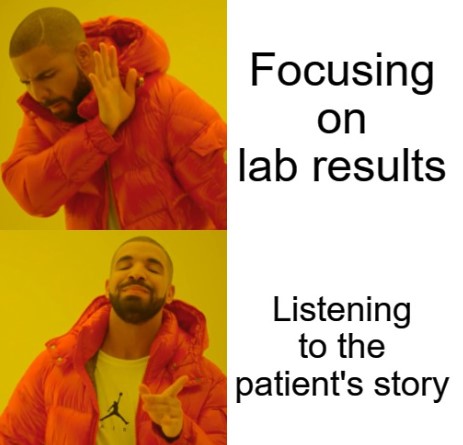
That’s where narrative medicine comes in. It’s an approach that insists on the value of stories in clinical practice, research, and education. It’s about recognizing that patients aren’t just cases; they are people with unique stories that shape their experiences of illness and health. And as healthcare providers, our ability to listen to, interpret, and respond to these stories is just as important as our clinical skills.
A Brief History of Narrative Medicine
To fully appreciate the power of narrative medicine, it’s helpful to know where it all began. The term "narrative medicine" was coined by Dr. Rita Charon, a physician and literary scholar, in the early 2000s. Dr. Charon, who trained in both internal medicine and literature, realized that something was missing in traditional medical practice—a recognition of the patient’s story as a critical component of care.
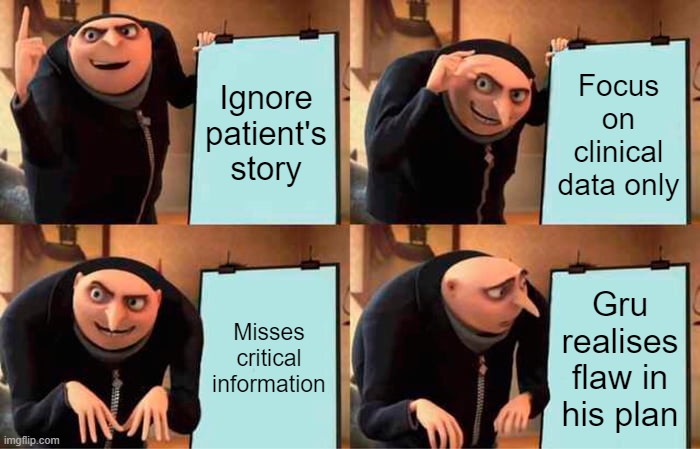
In her seminal work, Narrative Medicine: Honoring the Stories of Illness (2006), Dr. Charon argued that medicine often neglects the human side of illness, focusing instead on the technical and the measurable. She introduced narrative medicine as a way to bring the patient’s voice back into the center of care, emphasizing the importance of understanding the patient’s experience of illness as a narrative—a story with a beginning, middle, and end, filled with characters, conflicts, and resolutions.
Dr. Charon’s work led to the establishment of narrative medicine programs, initially at Columbia University, where healthcare professionals from all disciplines could learn how to integrate storytelling into their practice. These programs teach core skills such as close reading, reflective writing, and narrative competence—the ability to recognize, absorb, and interpret the stories of others.
Why Narrative Medicine Matters
But let’s be real—when you hear the term “narrative medicine,” it might sound a bit fluffy, like something you’d find in a poetry class rather than a medical lecture hall. I get it. The idea of integrating stories into the rigorous, evidence-based world of healthcare might seem like a luxury, an add-on, or even a distraction. However, narrative medicine is not about replacing science with sentimentality. It’s about complementing our clinical expertise with a deeper understanding of the human condition, which clearly, this “doctor” in Arrested Development did not.
So, what exactly is narrative medicine? It involves three core skills: attention, representation, and affiliation.
- Attention is about being fully present and listening deeply to patients' stories, understanding not just their symptoms but their lived experiences.
- Representation involves articulating these stories accurately, whether in writing or verbally, ensuring they are truly understood and respected in the medical narrative.
- Affiliation is about building meaningful connections between healthcare providers and patients, fostering a sense of partnership and empathy.
The Evidence for Narrative Medicine
The importance of narrative medicine isn’t just theoretical; there’s a growing body of evidence supporting its benefits. Research has shown that engaging in narrative practices can improve patient outcomes, enhance clinician empathy, and even reduce burnout among healthcare providers.
For example, a study on the use of the 3-Minute Mental Makeover (3MMM), a brief narrative exercise during outpatient visits, found that both patients and doctors reported feeling more connected and satisfied after sharing their written reflections. Patients described feeling like they were part of a team, while doctors noted improved communication and reduced stress levels—benefits that persisted even 12 to 18 months later.
Other studies have demonstrated that narrative medicine interventions can improve symptoms and quality of life for patients with chronic conditions such as asthma, rheumatoid arthritis, and heart failure. Patients who participated in narrative writing workshops reported lower levels of depression and anxiety, as well as an increased sense of control over their health.
Narrative medicine has also been shown to support diverse populations. For instance, in Native American communities, shared storytelling and narrative practices have been used to improve adherence to medical treatments and enhance the overall quality of life for patients with diabetes. These approaches have proven to be more effective than standard care, highlighting the importance of cultural sensitivity and the power of narrative in healthcare.
Moreover, narrative medicine isn’t just something we sprinkle on top of our clinical practice; it’s woven into the fabric of medical education. Reflective writing exercises, group discussions on literature and art, and the exploration of patient narratives help healthcare professionals process their experiences, develop a deeper understanding of their patients, and cultivate a more compassionate approach to care. These practices foster a collaborative learning environment where healthcare providers can share perspectives and support each other’s growth, ultimately enhancing their ability to communicate empathetically with patients.
Narrative Medicine and Communication: A Powerful Combination
Of course, some may still find this too "fluffy," viewing it as entertainment rather than hard science. This is where conversation analysis comes into play. By applying rigorous, evidence-based methods to the study of communication, conversation analysis bridges the gap between narrative expression and scientific inquiry, offering a deeper understanding of how our interactions influence patient care.
Think about it: every consultation is a conversation. And while talking is fundamental to human life, it’s not something we always get right. That’s where methods like CARM (Conversation Analytic Role-play Method) come in. CARM doesn’t rely on hypothetical scenarios or traditional role-playing; instead, it uses real-life conversation data to help us better understand and improve our communication practices. To give you a concrete example of its impact, Professor Elizabeth Stokoe, a pioneer in conversation analysis, demonstrated during a talk at the Royal Institution how tweaking just a single word in a consultation can significantly improve how patients' concerns are addressed. This isn’t just theoretical—Stokoe’s work shows that conversation analysis can lead to tangible improvements in patient care. This is particularly useful in healthcare, where the stakes are high and every word counts.
The Future of Narrative Medicine
But narrative medicine isn’t just about improving individual patient interactions—it’s about fostering a culture of reflection and empathy throughout the healthcare system. It’s about acknowledging that the stories we tell, and the stories we listen to, shape our professional identities, our relationships with patients, and our understanding of what it means to be a healer.
As we move forward, narrative medicine has the potential to reshape how we think about healthcare. It encourages us to slow down, to listen more carefully, and to connect more deeply with those we care for. In doing so, it not only enriches our professional lives but also makes the healthcare system more humane, more compassionate, and ultimately more effective.
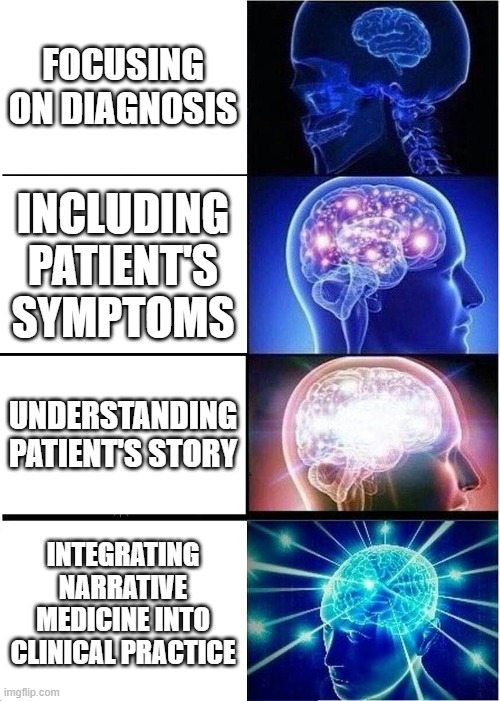
And now, as I launch this Substack, HEART: Healthcare Experiences and Reflective Tales, I invite you to join me on this journey. Here, we’ll explore the rich tapestry of stories in medicine—from the clinic to the classroom, from the personal to the professional. We’ll delve into the experiences that shape us as healthcare providers and reflect on how we can use these stories to bring more humanity into our practice.
So, whether you’re a seasoned clinician, a medical student, or just someone interested in the intersection of healthcare and storytelling, I hope you’ll find something here that resonates with you. And yes, there will be plenty of bad puns and funny video clips along the way—because if we’re going to talk about the serious stuff, we might as well have a little fun doing it!
Stay tuned for more stories, insights, and reflections. And if you’re as psyched about this as I am, go ahead and subscribe. Trust me, you won’t want to miss what’s coming next.
Welcome to HEART.
This post was lovingly (and maybe a bit obsessively) crafted by Dr. Victoria Ekstrom, co-lead of Narratives in Medicine at the SingHealth Duke Medical Humanities Institute (SDMHI). When she's not busy convincing her colleagues that stories are just as important as stethoscopes, she’s probably making bad puns and drinking way too much tea.
Stay tuned for more tales, because in healthcare, the story never really ends. 🎉
Talk back
Thoughts, reactions, a story of your own. We read every comment.