
In January 1984, a young Steve Jobs stood before an eager audience at the Apple shareholders meeting and recited the iconic words of Bob Dylan: “The times they are a-changin’.”
For the times they are a-changin’
Come writers and critics, who prophesize with your pen
And keep your eyes wide, the chance won’t come again
And don’t speak too soon
For the wheel’s still in spin
And there’s no tellin’ who that it’s namin’
For the loser now will be later to win
For the times they are a-changin’
It was the prelude to unveiling the Macintosh computer, a device that heralded the dawn of a new era—one where personal technology became accessible to everyone, not just the technically inclined. This monumental moment marked the beginning of a new era in a world increasingly shaped by technology. Once confined to technical professionals, computers became accessible and intuitive for the average consumer, thanks to Apple's innovative approach.
This transformation revolutionized industries like music and communications and laid the foundation for the digital evolution of healthcare. The widespread adoption of computer skills drove digitization within the medical field, improving efficiencies and enabling seamless record-keeping. These advancements transformed communication across medical specialties, fostering better coordination and paving the way for a more patient-centered approach to care.
These prophetic words resonate deeply today as we stand at the intersection of artificial intelligence (AI) and medical humanities. The evolution of healthcare technology, particularly AI, presents both opportunities and challenges in maintaining the human touch that lies at the heart of medicine. Just as the Macintosh democratised computing, we now face a similar revolution—one that promises to transform not just how we treat diseases, but how we understand and care for the human beings behind the diagnoses.
The Human Element in an AI-Driven World
Medicine has always been an art as much as a science. The introduction of AI into healthcare brings this duality into sharp focus. While AI excels at processing vast amounts of data and identifying patterns, the practice of medicine remains deeply rooted in human connection, empathy, and understanding. The challenge lies not in choosing between technology and humanity, but in finding ways to enhance both simultaneously.
Consider the narrative medicine movement, which emphasizes the importance of patient stories in clinical practice. AI can help capture and analyse these narratives more effectively, but it's the human clinician who brings the emotional intelligence and cultural sensitivity needed to truly understand them. When AI handles routine tasks, it creates space for deeper human connections—time for doctors to listen more attentively, understand more deeply, and connect more meaningfully with their patients.
AI as the New Frontier in Healthcare
AI is no longer a futuristic concept; it is here and actively transforming healthcare. From streamlining administrative tasks to assisting in diagnostics and treatment planning, AI is being woven into the fabric of modern medicine. Looking ahead, this widespread use could have an impact similar to that of computers decades ago, unlocking possibilities we are just beginning to imagine. Just as computer skills enabled interconnected healthcare systems, AI expertise could drive systems that dynamically integrate data from wearable health monitors, genome sequencing, and electronic health records to deliver highly personalized, real-time treatment plans. [1] AI-powered virtual assistants might proactively identify and address patient concerns, offering recommendations before symptoms arise. Collaborative AI tools could synthesize complex data into actionable insights, enhancing interdisciplinary teamwork and fostering innovation in treatment approaches. These advancements could transform not only workflows but also the interactions between healthcare providers and patients, promoting more meaningful and efficient care delivery.
The introduction of large language models (LLMs), such as ChatGPT, has further expanded AI’s potential. These tools enable natural, human-like interactions, bridging the gap between technology and users. [2] Imagine chatbots on steroids, revolutionizing patient engagement, triaging concerns, and offering timely advice.
Redefining the Clinician-Patient Interaction
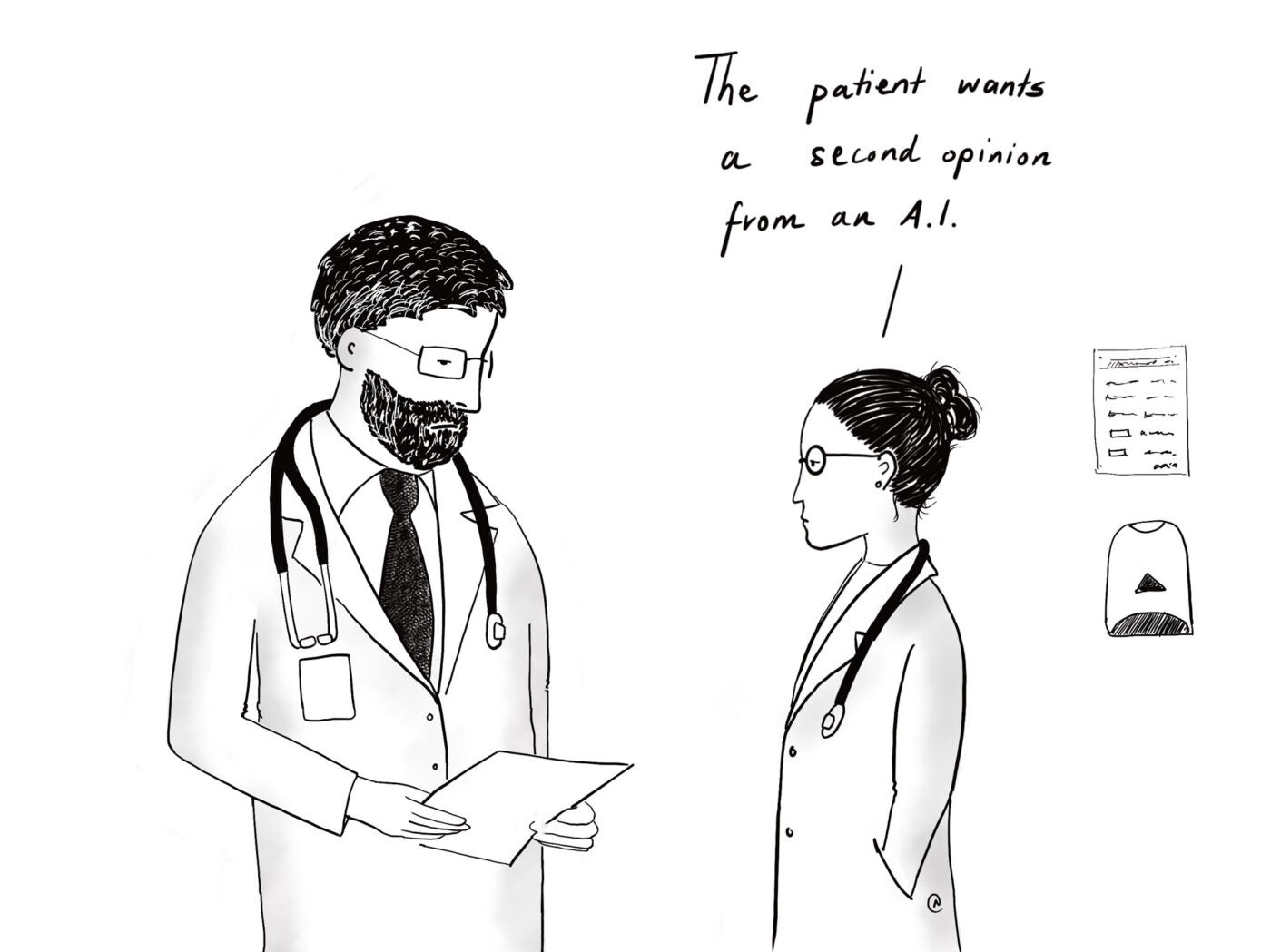
AI doesn’t just improve efficiency; it also redefines the essence of clinician-patient relationships. By automating routine tasks, healthcare providers gain precious time to focus on what truly matters: personalized care. [3] For complex cases, clinicians can devote more cognitive bandwidth to crafting nuanced treatment plans. Moreover, AI enhances workflow optimization, allowing practitioners to pursue quality improvement projects or further their professional development—goals that often take a backseat amid day-to-day pressures. A practical example implemented in SingHealth is Note Buddy, an AI based ambient scribe that transcribes and summarises clinical notes in real-time during physician-patient conversation. Cognitive and administrative burden of clinical documentation may be potentially reduced, allowing clinicians to better focus on patient interaction.
Through AI, access to care becomes more equitable. Virtual assistants and AI-driven platforms extend services to underserved populations, bridging gaps in healthcare availability. This is not just technological advancement; it is the democratization of medicine.
Navigating Challenges and Building Trust
While the promise of AI in healthcare is compelling, its implementation raises important ethical and humanistic concerns. AI systems, particularly large language models, can exhibit biases that may exacerbate existing health disparities. Non-deterministic models like large language models may hallucinate, making up references that do not exist or provide recommendations that are not evidence based. Even their environmental impact warrants consideration, as the intensive computing required for AI training and deployment contributes significantly to carbon emissions. [4]
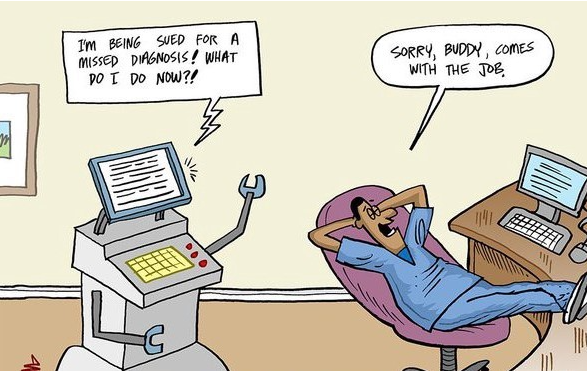
Yet these challenges shouldn't overshadow AI's potential to enhance healthcare's human elements. The key lies in approaching AI implementation through a humanistic lens, acknowledging that neither AI systems nor humans are flawless. As clinicians work alongside AI, they uncover its imperfections and biases. This iterative process enables the development of robust guardrails, fostering a partnership that enhances both human and machine performance.
Trust becomes the cornerstone of successful AI integration. Virtual assistants and AI-driven platforms must be designed not just for efficiency, but for empathy and cultural sensitivity. Transparent systems that clearly explain their decision-making processes build confidence among both clinicians and patients. Ensuring ethical deployment and addressing concerns about data privacy and equity are critical to maintaining this trust.When we prioritize ethical deployment, data privacy, and equity alongside technical capabilities, AI can become a tool that amplifies rather than diminishes the human aspects of healthcare.
Steering the Winds of Change
Bob Dylan’s timeless lyrics remind us that resisting change is futile:
Come gather ’round people
Wherever you roam
And admit that the waters
Around you have grown
And accept it that soon
You’ll be drenched to the bone
If your time to you is worth savin’
Then you better start swimmin’ or you’ll sink like a stone
For the times they are a-changin’
Medicine is evolving rapidly, and we have the opportunity to shape this evolution. The integration of AI in healthcare presents an opportunity to reinvigorate the humanistic traditions of medicine. By automating routine tasks, AI creates space for the practice of narrative medicine, shared decision-making, and culturally competent care. The key lies in viewing AI not as a replacement for human judgment but as a tool that enhances our capacity for empathy, understanding, and connection.
By embracing AI, we can harness its transformative power to sail faster and further than ever before. The times are indeed a-changin’—and they hold immense promise for the future of healthcare. Let us welcome this change with optimism, creativity, and the unwavering commitment to improve the lives of patients everywhere.
References:
[1] Rajpurkar, P., Chen, E., Banerjee, O. et al. AI in health and medicine. Nat Med 28, 31–38 (2022). https://doi.org/10.1038/s41591-021-01614-0
[2] Clusmann, J., Kolbinger, F.R., Muti, H.S. et al. The future landscape of large language models in medicine. Commun Med 3, 141 (2023). https://doi.org/10.1038/s43856-023-00370-1
[3] Landman AB, Tilak SS, Walker GA. Artificial Intelligence–Generated Emergency Department Summaries and Hospital Handoffs. JAMA Netw Open. 2024;7(12):e2448729. doi:10.1001/jamanetworkopen.2024.48729
[4] Ong, CLJ., et al. Medical Ethics of Large Language Models in Medicine. NEJM AI 2024;1(7)
Dr Jasmine Ong is a critical care pharmacist and clinician innovator at Singapore General Hospital. She is curious and passionate about blending science, technology and always on the lookout for the next big idea – or at least a good cup of coffee. Whether it’s geeking out over a new AI model or diving in to an unexpected new hobby (most recently flora arrangement!), she believes learning should always be an adventure.
Dr Anh Tran is a consultant radiologist at Singapore General Hospital. He is a computer geek at heart. He's always on the lookout for tools to improve his efficiency in both work and play. With a practical approach to technology, he sees AI as another useful tool to help streamline tasks and processes.
Talk back
Thoughts, reactions, a story of your own. We read every comment.