The scientific world is ruled by objectivity. The medical world relies on trials that are scientifically sound and proven before actual implementation of treatment. There is no such thing as a “gut feeling.”
One time, after the presentation of a medical history during an ordinary general medicine ward round, I told my team of junior doctors, “His eyes—our patient’s eyes—look so sad and anxious. Let’s sit down and talk to him and ask if there is anything else that is bothering him.” Well, most of them stared back blankly, silently judging my subjectivity. Telling me indirectly: “We have already done everything—presented his whole medical history and a mini mental state exam. What else do you want? An explanation for his emotional eyes? We can’t help you.” Of course, I came back on track and we discussed and laid out the management plans. I clearly explained each and every treatment objectively and based on current guidelines. I had saved myself and saw their respect return.
But why does it have to be separate? Why can’t we comfort and treat? Does objectivity really go out the window when we become emotionally involved? Do we really have to be objective all the time? Or would it help to place ourselves in our patients’ shoes and see their perspective—to understand the disease from their vantage point?
Most of the time, their struggles extend far beyond their disease, such that following a simple medical order proves to be very tough. A low-salt diet when they have to eat out every workday. Compliance with furosemide when the workplace doesn’t have a nearby toilet. Most doctors think it’s the easiest thing to do—taking the tablets—but in fact, we don’t know our patients’ realities. Does it hurt to connect? If we understand our patients better, we might provide a solution that is not only better but actually plausible for them. After all, life is not a randomised double-blind placebo-controlled trial, and hence outcome projections from the studies may not be achieved. So can we do the next best thing—appropriate and individualise treatment to fit our patients’ lives?
On the other side of the coin, would it hurt for patients to realise that their doctors are human and therefore vulnerable? For the longest time, people have perceived disease as the enemy and doctors as their soldiers against a villainised disease. However, sickness, disease, and death are a part of life. Doctors do not have a fail-proof remedy. We treat what we can, and most of the time we don’t save lives—we control disease, slow its progression, and make the end as dignified and as comfortable as possible.
It would help to be seen as the doctor who can be relied on in sickness—not as a saviour, but as a companion who will do their best to make the patient’s life healthier and their passing peaceful. If we are at war against disease, we will never win, for disease is not the villain in our stories; it is part of who we are. Would it help if patients saw their doctors in this light? Not the infallible doctor, but the humane one, pulling out all their expertise to treat, to care, and to comfort. Would it help if we saw that disease is not the villain, but a reminder that ours is a living body—we grow, we survive, we fall ill, and we come to a gracious acceptance of the end?
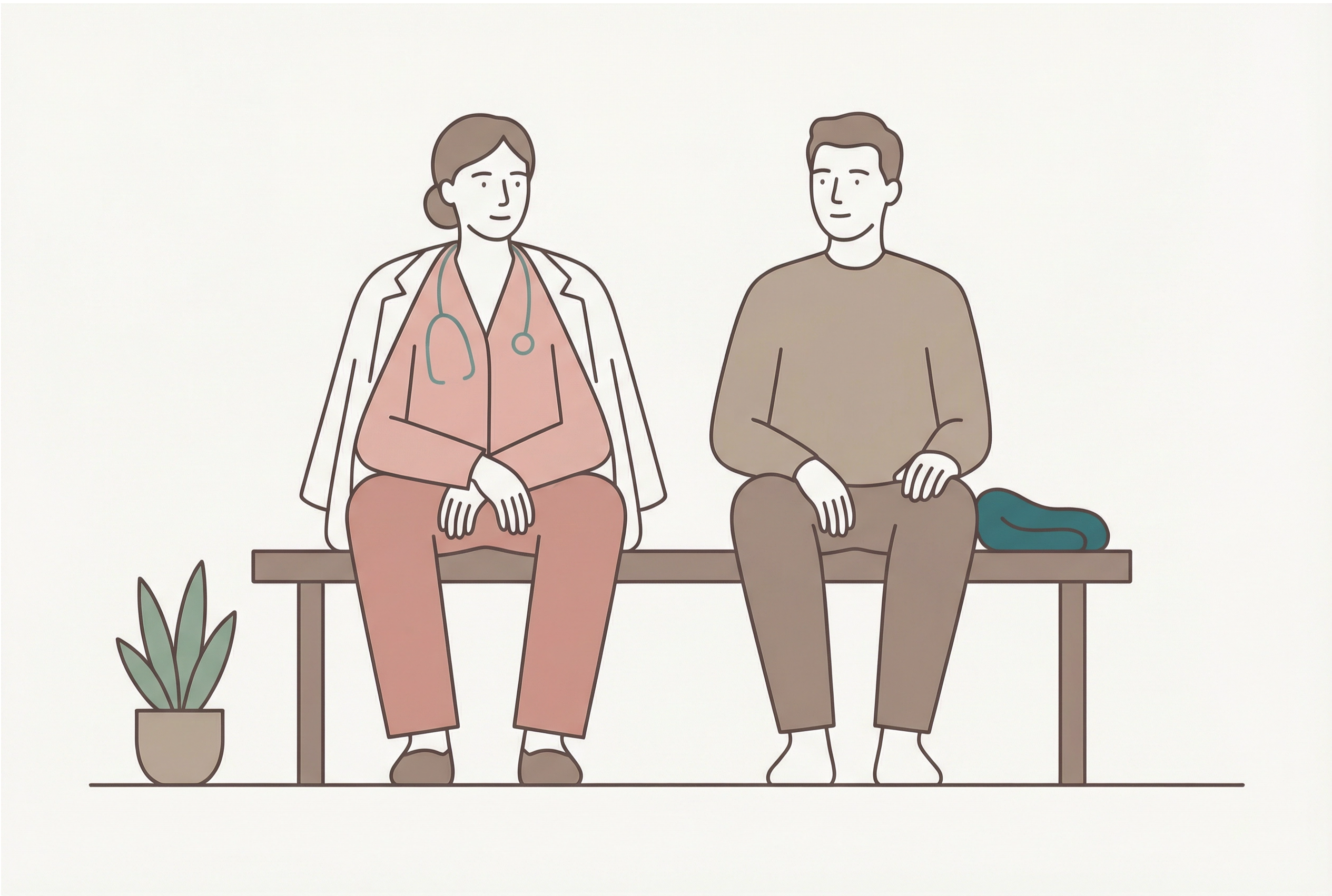
Lastly, would it help if doctors and patients alike saw each other not just as health versus sickness, but for who we truly all are—human beings?
I have no answers. I only have thoughts…
Lourdes is a hospitalist who has worked in the inpatient medical wards for many years. She has had many patient encounters that linger in her mind and she wants to share these stories - which are not of groundbreaking scientific breakthroughs, rather, stories of the ordinary usual patients living their not so ordinary lives….
Talk back
Thoughts, reactions, a story of your own. We read every comment.