Beyond the Clinical Chaos
Emergency medicine is defined by urgency—rapid decisions, life-saving interventions, and intense human encounters. But beneath this clinical intensity lies a quieter reality: how those on the frontlines process what they witness and find meaning in their work.
For four clinicians at Changi General Hospital's Emergency Department, art has become essential to this process.
Painting isn't just a hobby but a practice of restoration—a way to process the day's experiences, find calm amid chaos, and reconnect with purpose.
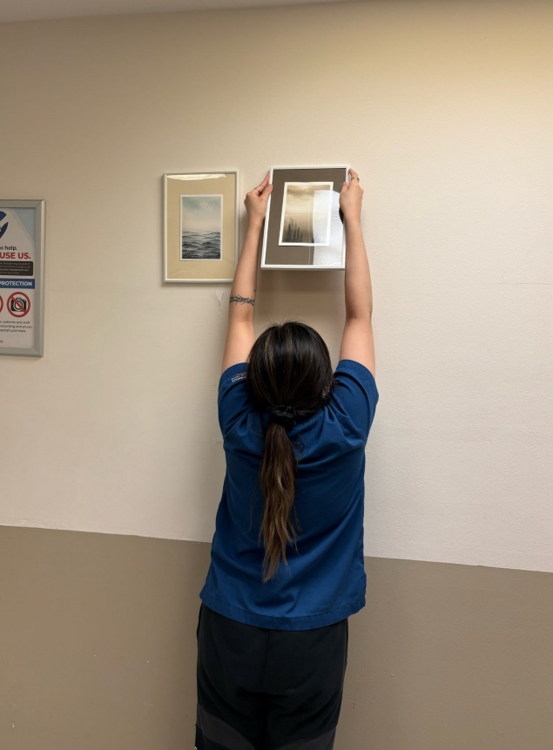
Four Clinicians, Four Artistic Voices
Each brings their unique perspective to canvas, influenced by their personality and experiences in medicine.
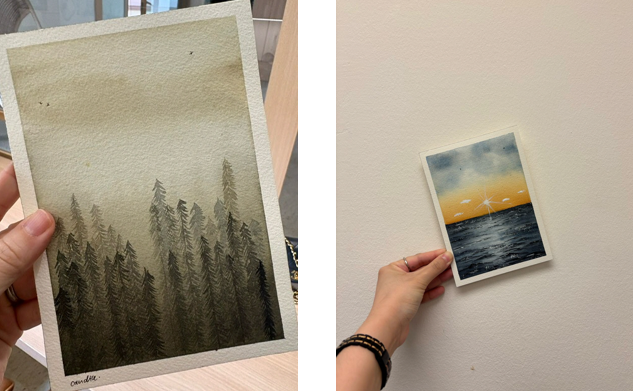
Candice works in watercolor, creating misty forests and waves that capture nature's changing states. Her paintings explore the balance between what's visible and what remains hidden. "Each watercolor hints at the mysterious unknown, compelling us to look closer... They invite us to embrace the beauty and mystery that surrounds us and find meaning in what is hidden."
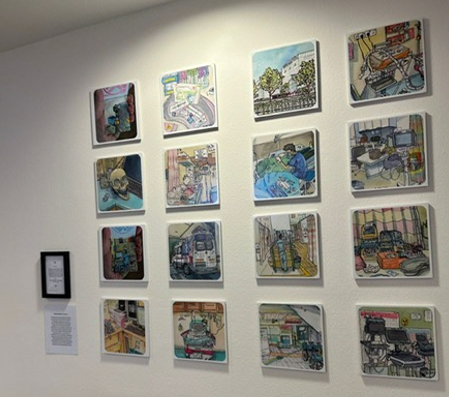
Sarajane documents the quiet moments of hospital life through watercolour, often painting after shifts. Her work captures scenes others might miss: a nurse mid-task, a phlebotomy tray waiting to be used, a brief exchange between doctor and patient. "Each painting invites reflection on the silent stories unfolding within the emergency department, where hope, resilience, and compassion intertwine in the everyday rhythm."
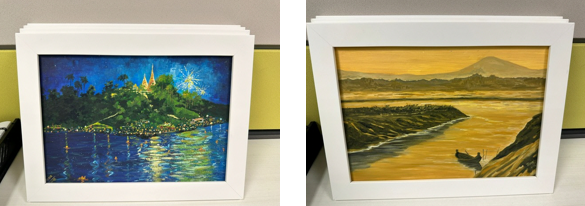
Myo's acrylic paintings feature bold strokes and vivid colors, yet create a sense of stillness. His layered brushwork reflects the complexity of medical decision-making—multiple factors that must be integrated into coherent action. His work offers viewers a moment to pause and find balance within intensity.
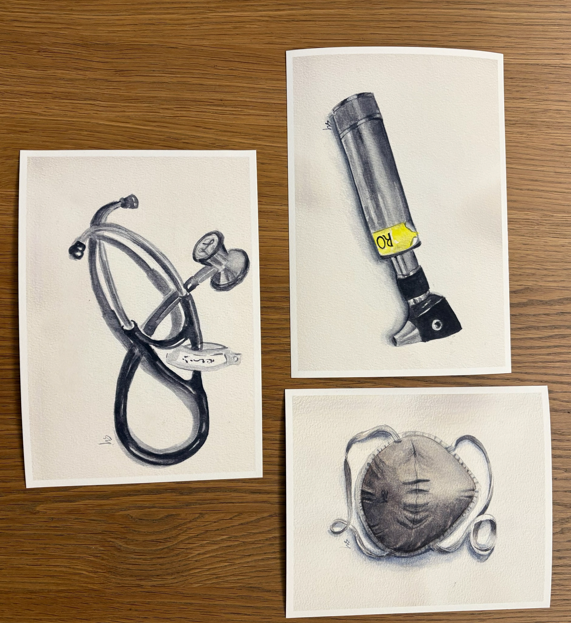
Shin Ying explores the intersection of medical tools and human care. Her series Tools of the Trade transforms everyday instruments—N95 masks, otoscopes, stethoscopes—into symbols of connection. Through her art, these utilitarian objects reveal unexpected meaning, reminding viewers of the human intentions behind medical technology.
Why Art Matters in Medicine
Perspective – The physical distance between clinician and canvas mirrors the psychological distance needed to integrate challenging encounters. This creates space to process emotion without being overwhelmed by it.
Connection – Their shared artistic practice strengthens bonds between colleagues. In a field where professional isolation contributes to burnout, these creative connections foster resilience.
Presence – The sensory engagement of painting—brush texture, colour mixing, physical movement—reconnects these clinicians to embodied experience in a profession that often demands emotional detachment.
Research confirms what these clinicians have discovered through practice: regular creative expression allow glimmers in our lives . In medicine, creative outlets aren't luxuries but necessities—keeping us afloat.
From Personal Practice to Hospital Culture
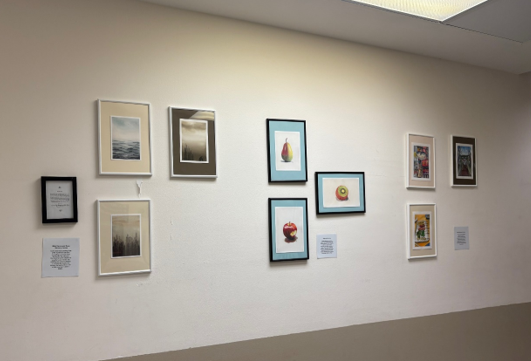
What began as individual hobbies has evolved into something more collective. By sharing their passion, the Ed Doodlers are wearing their heart on their sleeves. Institutional spaces are transformed into galleries of meaning where patients, families, and colleagues can briefly connect. They hope to engage and encourage more of their colleagues to contribute to the gallery wall.
Evidence shows that art in healthcare settings measurably impacts outcomes—reducing anxiety, decreasing pain perception, and even lowering blood pressure. Research published in the Journal of Emergency Medicine demonstrates that visual art in emergency department waiting rooms can positively affect patient behavior and perception of care, contributing to a less stressful environment during what is often a high-anxiety experience. For patients navigating the disorientation of emergency care, these visual anchors provide meaningful psychological support.
For staff, the significance runs deeper. Seeing colleagues' artwork serves as a reminder of shared humanity—that behind professional expertise are whole people with creative depth. This recognition fosters a culture of mutual support critical to sustainable emergency practice.
Attention: The Common Thread
The most significant connection between art and medicine may be the quality of attention each requires. Both demand what philosopher Simone Weil called "the rarest form of generosity"—giving complete attention.
In painting, one practices sustained observation—noticing subtle variations in color, light, and form. This same attentional discipline can help a clinician recognise slight changes in a patient's breathing, subtle shifts in skin colour, or almost imperceptible signs of deterioration.
The careful observation developed through art enhances clinical perception, while the high-stakes attention required in medicine deepens artistic seeing. Both teach us to look beyond the obvious, detect patterns within apparent chaos, and maintain presence amid intensity.
A Culture of Noticing
Perhaps most importantly, art reflects a culture of noticing. In medicine, where urgency often eclipses subtlety, learning to pay attention—to the flicker of light, the shift in tone, the quiet cue—can make all the difference.
These creative practices hone this skill: the ability to observe, interpret, and hold space for complexity. And that, ultimately, makes one a better person.
In the emergency department, where life's fragility is daily currency, the ED Doodlers demonstrate that creativity isn't separate from medicine—it's an essential component of sustainable, humanistic care.
This feature celebrates the artistic journey of Candice, Myo, Sarajane, and Shin Ying—four emergency department clinicians,at Changi General Hospital who are redefining what it means to heal through their creative practice. They are grateful to the department for allowing them to display their doodles on the walls.
You can check out Candice, Sara and Shin Ying’s artwork on Instagram below!
- Candice’s Instagram: courageouslytrue
- Sara’s Instgram: Emergency Painter
- Shin Ying’s Instagram: Life with an Artitude
References:
- Nanda U, Chanaud C, Nelson M, Zhu X, Bajema R, Jansen BH. Impact of visual art on patient behavior in the emergency department waiting room. J Emerg Med. 2012 Jul;43(1):172-81. doi: 10.1016/j.jemermed.2011.06.138. Epub 2012 Feb 9.
Talk back
Thoughts, reactions, a story of your own. We read every comment.