That one day came.
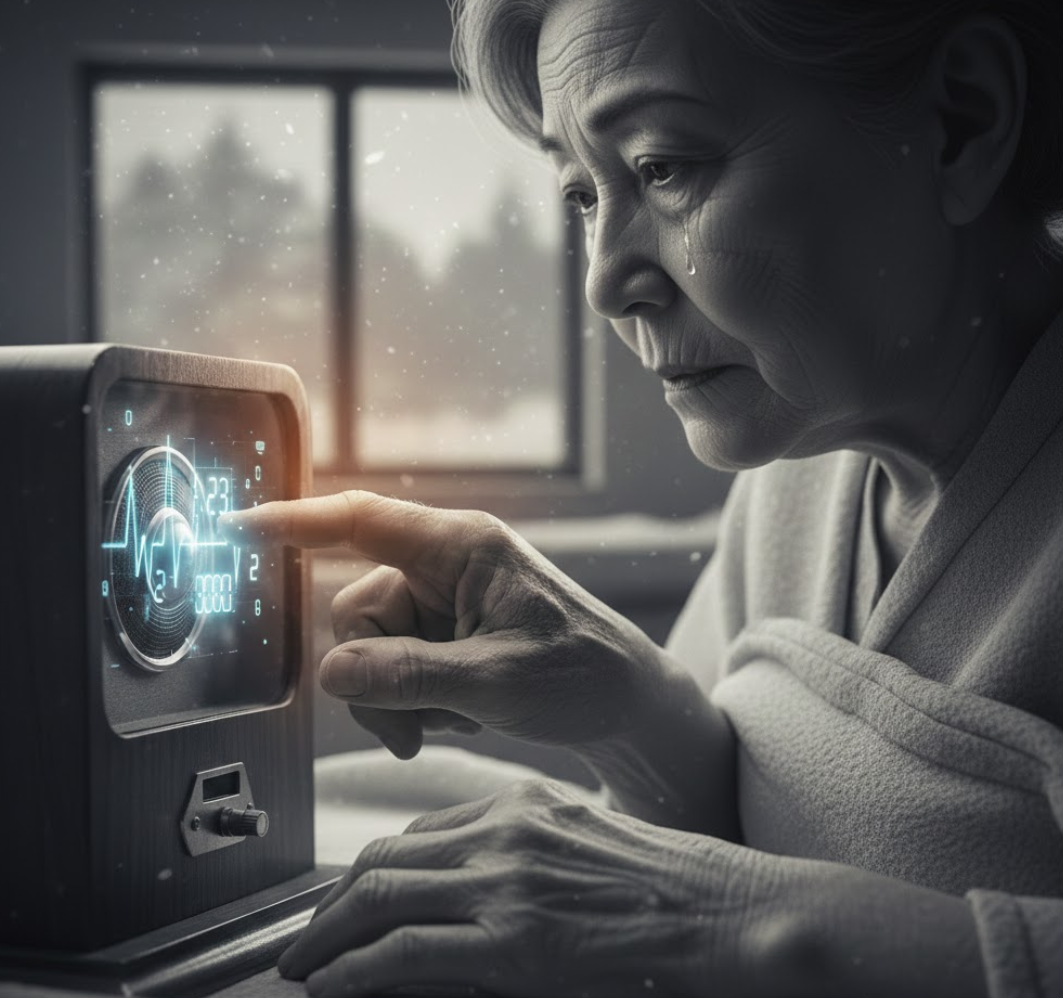
In the manless hospital,
the bed emitted sonic signals,
tracing his life-flow, sprouting numbers
that sang his sad song of health.
Humanoid nurses inserted the cannula
with unhuman precision.
The blueberry drip danced along his veins
bargaining for more time.
“It is time.” His bed declared.
Outside, the last snow kissed the ground.
He played “White Christmas”
as his life-flow slowed, and stopped.
That one day came.
A humanoid nurse cleared the bed of
the last patient.
I was asked to write an “other-worldly” piece as part of the Narrative Medicine course at Columbia University. I decided to write a speculative futuristic poem and this is my accompanying reflection:
This poem looks into the future to that one day. Perhaps one day, our beds will be the one talking to us instead of humans. We can DIY our investigations based on artificial intelligence and make our seemingly autonomous decisions without the need to consult human doctors with their prejudices and biases.
Breaking bad news will be a thing of the past. The bed will keep you updated of world news and space news, along with your personal health news. (It is only ‘bad news’ when someone human breaks it to you.) When information is given through your bed, they are given as facts. Just like the calories written behind the bag of potato chips.
Prognosis? The bed will let you know matter-of-factly. There will be apps to manage your human emotions. Games to distract you. Decision-making tools based on your DNA and personalised precision health data.
Dying? People don’t wait for death. They get notified. Even euthanasia and physician-assisted suicide will be things of the past. Humans will be at peace with AI-determined completion of lives. Afterall, AI has raised them.
And even then, humans will still long for a warm touch, a familiar voice, a loving presence. Won’t they?
Prompt: When you look into the future, what do you see? (Write in the comments in poetry, prose or essay).
Jamie is a palliative care physician who believes she has the best job in the world — her work entails listening to untold stories of extraordinary lives. While this can be heavy and intense, poetry is her way of channeling these special encounters to better understand our common humanity. More of her work can be found here.
Talk back
Thoughts, reactions, a story of your own. We read every comment.