When a person dies, he is shrouded in white cloth called Kafan. At the heart of Bedok, a group of elders moved to a dance titled “Kembali” (“To Return”), silently folding a piece of batik evoking the Kafan, a few of them in tears. They held up branches, then gently returned them to earth. For all of us, death will happen only once. But in Kembali, some seniors found an opportunity to rehearse the passage of life to death:
“Folding the batik makes me think of when I will leave the world.”
Mdm Siti (Name changed).
“When I place my pot of branches down, it’s like flowers at my own grave. I look and think, “That’s it forever, you stay there.” The dance presents a story, and I rehearse the process until I understand, “Oh, this is death,” and from there, I find ease.
Mdm Nuri (Name changed).
Kembali is part of ArtsWok Collaborative’s longstanding project called Both Sides, Now, which delves into the delicate themes surrounding the end of life through community engagement, dialogue, and artistic collaboration. These sessions yield deeply moving, intimate narratives of loss, grief, and hope, brought to life through various artistic forms. Installed in shared public spaces, these creations break the busy churning pace of daily life, inviting reflection on what it truly means to be human—to live, to face mortality—and how these conversations transform the bonds we share.
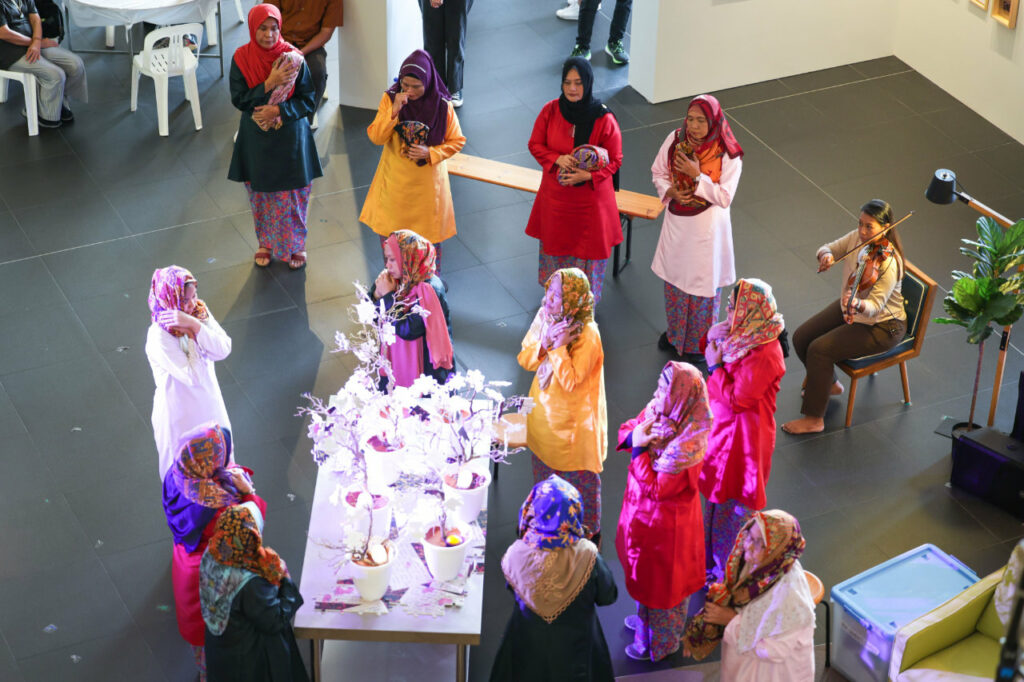
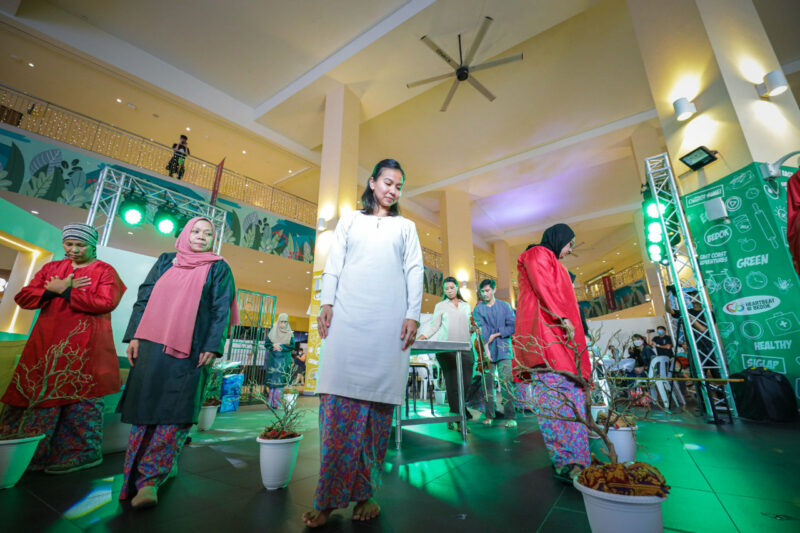
“Kembali” dance performance at Heartbeat @ Bedok. Photo Credits: Artswok Collaborative
Both Sides, Now deeply moved me and inspired an exploration into one of its unique renditions, intentionally curated for the Malay-Muslim community rather than its usual primarily Chinese audience. This research is published in the Asia Pacific Journal of Social Work. In listening closely to the Malay-Muslim participants, these key insights emerged.
“Trust in Allah, But Tie Your Camel”: Navigating Faith & Preparedness
In Islam, after death comes Yawm ad-Din, the Day of Judgment, when one’s deeds are weighed to determine entry into Jannah (Paradise), granted by Allah’s mercy and compassion. This belief, alongside other factors, sometimes brings anxiety for those unprepared to face not only death but what lies beyond.
Hence, death preparation can often manifest as spiritual acts—praying, charity, repentance, and strengthening faith. This can include Tawakul (a surrender and reliance on Allah), believing that God will resolve unfinished matters and safeguard their loved ones. Responding to this, other community members feel that this has led to some neglect in recognising the value of earthly preparations, such as advance care planning, honest dialogue, and seeking closure with family. This needed balance is aptly summarized by the Islamic proverb, “Trust in Allah, but tie your camel.”
In light of the role of religion, intricacies regarding care planning can also arise. For example, an individual may wish to have an advanced medical directive but feel conflicted if one’s father, who believes it is his duty to be the family’s moral guide, views such directives as contrary to religious teachings.
Much more remains to be shared and understood about the nuances of Malay-Muslim beliefs about death. Doing so equips us with cultural competence and gives healthcare providers access to the lens of the patient and family. Appreciating the roots of a patient’s decision or resistance opens pathways to build trust more swiftly and deliver compassionate care.
When Words Falter: Using Everyday Stories and Art
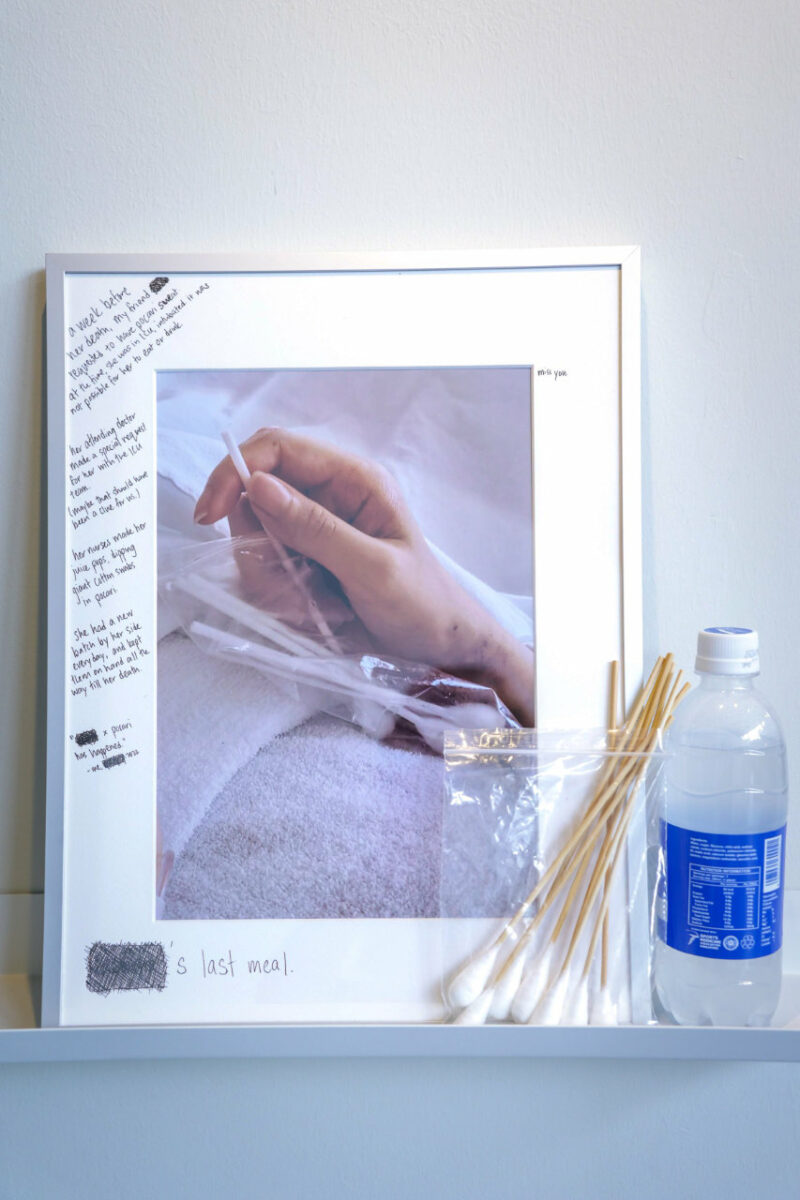
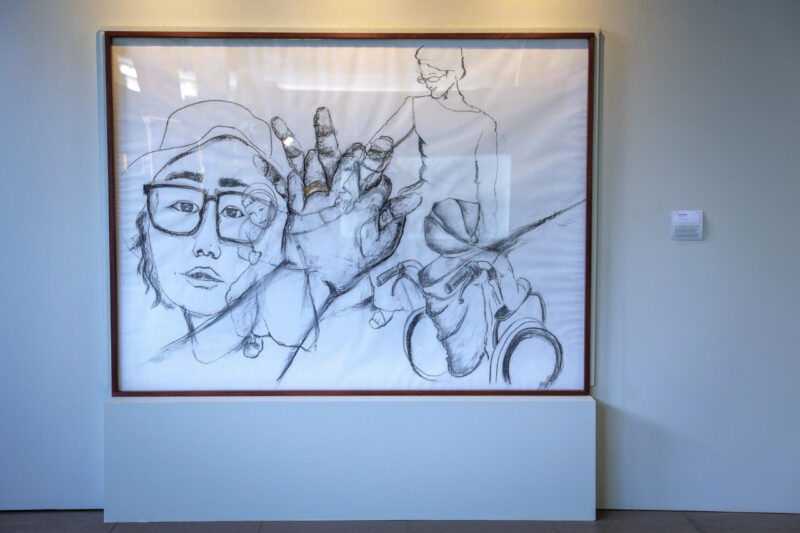
The difficulty of talking about death is, of course, not exclusive to the Malay-Muslim community. Many people struggle to find the right words and moment:
“Talking about death feels like I’m about to dive off a cliff…there’s too much of an emotional intimacy gap with the other party to even start saying something.”
Ms Putri (Name changed)
Art and storytelling serve not only as unique ways for individuals to make meaning of life and confront death, but are also effective mediums to bridge emotional gaps in death conversations. In Both Sides, Now, community participants invite their families to their art exhibition. The exhibition becomes an intermediary that puts space between artists (participants) and viewers (their families), allowing them to reflect on these topics comfortably in their own space.
Conversations can also flow more naturally through casual references to art, television episodes, or everyday experiences, as people share impressions and feelings. Saying something like, “Yesterday, I heard about this story. What do you think about what happened?” can shift the uncomfortable focus away from either party holding the conversation, while allowing space to reflect and share about death topics from a third-person perspective of a scenario.
Closing: The Work of Understanding
As a Chinese researcher and former medical social worker, I try my best to approach cross-cultural interactions with mindfulness, fully acknowledging that I do not possess the same insider knowledge as those within each culture. With patients, interviewees, families, and friends of diverse cultures, what has been most appreciated is approaching our conversations with sincerity, curiosity, and a readiness to make room for another person’s reality, and then respond as if it were real to me too.
In exercising empathy like a muscle and in becoming adept at broaching difficult topics, I find poignant moments of vulnerability and connection with people and patients, which often turn a trying day at work into one with meaning and life.
Kaitlyn Tay is a humanitarian and development worker, drawing from experience in medical social work and research. Her interests include community development, the arts, and experiences that shape care and connection, such as end-of-life conversations.
Talk back
Thoughts, reactions, a story of your own. We read every comment.