I attended Professor Brian Hurwitz’s talk at the Singapore Medical Humanities Conference last week.
He spoke about anecdotes — those small, personal stories that seem trivial at first, yet somehow stay with us longer than the data ever does.
It struck me that so much of our life in medicine still moves through anecdotes.
We teach through them.
We de-stress through them.
We bond over them — often during meal times, coffee breaks, or post-call decompressions when the adrenaline has faded and we begin, almost instinctively, to narrate.
“Do you remember that patient…?”
It’s how wisdom travels in hospitals — not through PowerPoint slides, but through memory and voice.
When Medicine Was More Story Than Science
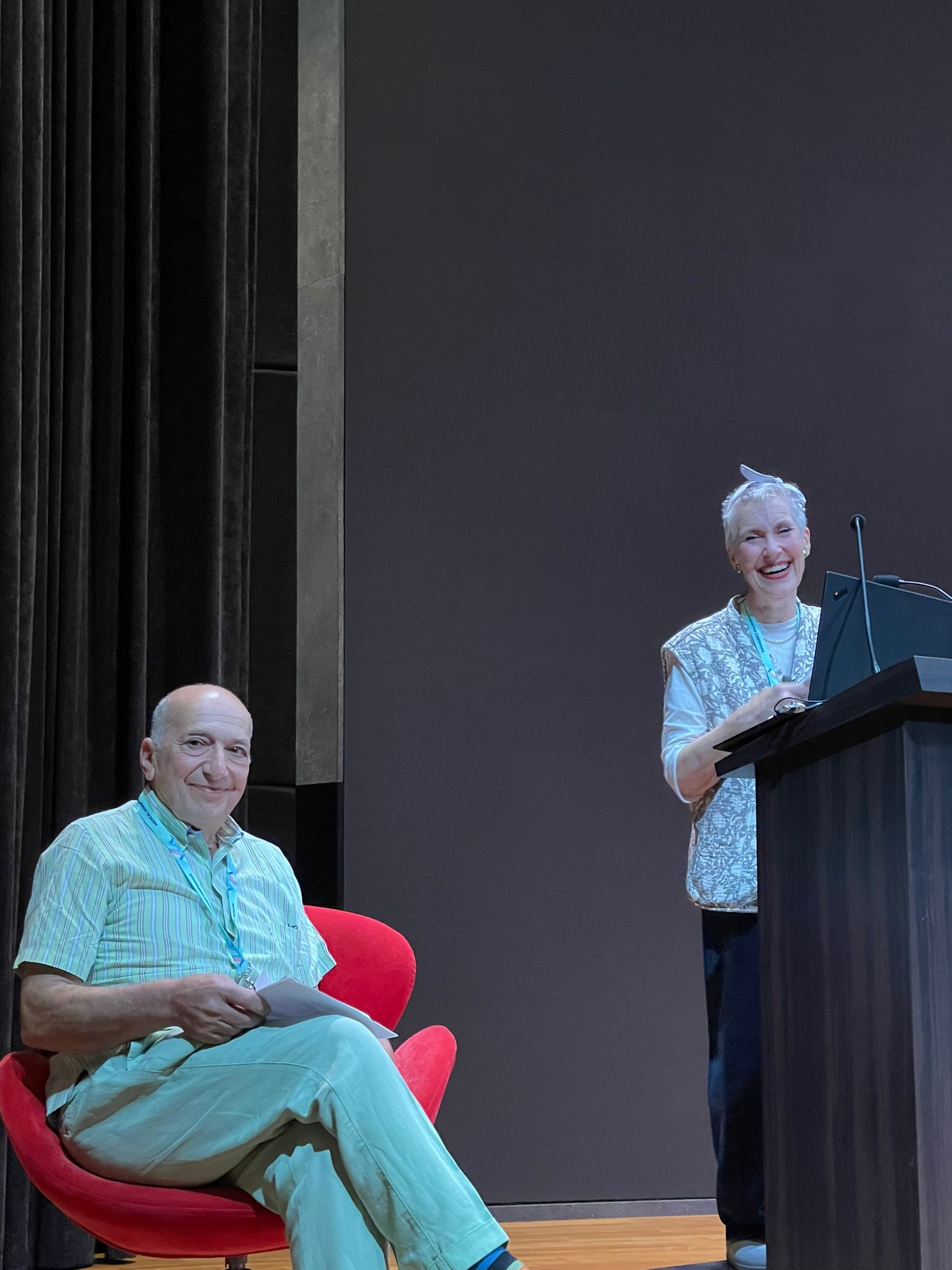
Professor Ruth Richardson noted that early medical journals brimmed with anecdotes — letters, reflections, case vignettes — before the age of clinical trials shifted our gaze toward the aggregate. The voice of the observer slowly gave way to the voice of the statistician.
And perhaps rightly so. Anecdotes are imperfect witnesses. They overgeneralize, distort, and seduce. We cannot — and should not — build an entire discipline upon them.
Yet, as Hurwitz reminded us, anecdotes were once the heartbeat of medical writing: the narrative form through which clinicians made sense of uncertainty, and shared insight when evidence was still gathering its footing. They were how medicine thought out loud.
The Stories We Tell When No One Is Listening
Even today, when the official languages of medicine are objectivity and outcome measures, our informal conversations remain deeply narrative.
In the safety of the pantry or the lift lobby, we tell each other stories to process what cannot be captured in a chart: the patient who surprised us, the one who reminded us of someone we love, the moment we nearly broke down in the bathroom but didn’t.
These small exchanges are not noise; they are meaning-making.
They are how we metabolize the emotional residue of clinical work.
Anecdotes are not just about what happened — they are how we affirm who we are.
Inherited Narratives
I began to think about the anecdotes I inherited — from mentors, colleagues, even patients.
There was the story of the doctor who wept after a complication but told no one until years later. The nurse who still carried a patient’s thank-you note folded into her wallet. The senior who always said, “Never stand over a patient when you can sit beside them.”
These stories are never written in textbooks, yet they are what truly teach us medicine.
Each one carries an unspoken value system: humility, endurance, kindness. They become part of our muscle memory — guiding how we act long after we’ve forgotten the evidence tables.
And sometimes, they contain their own quiet warnings — reminders of what not to repeat: the culture of stoicism mistaken for strength, the subtle silencing of emotion, the easy use of labels like “non-compliant” or “difficult.”
Every anecdote is both inheritance and invitation — an offering to reflect, to choose what to keep and what to lay down.
The Anecdote as Counterpoint
Perhaps anecdotes endure precisely because they resist neat categorization.
They sit in the grey zones — between data and feeling, between fact and meaning.
They remind us that evidence may guide action, but stories guide understanding.
Anecdotes are not enemies of science; they are its counterpoint. They whisper what numbers cannot say: that healing involves not only the measurable, but also the memorable.
As medicine becomes increasingly technologized — with AI scribes, dashboards, and datasets — I find myself wanting to protect the unquantifiable: the corridor story, the sigh between sentences, the human shorthand of “you had to be there.”
We shouldn’t romanticize anecdotes, but we shouldn’t dismiss them either. They are the oral tradition of medicine — the pulse beneath the protocol.
Anecdotes are how we stay connected to one another in a system that too often rewards efficiency over empathy.
They are how we remember that behind every data point lies a person, and behind every clinician, a story worth telling.
Reflection
When Professor Hurwitz ended his talk, he reminded us that anecdotes are not relics of a pre-scientific age. They are bridges — between the measurable and the meaningful.
We inherit these stories not just to repeat them, but to reimagine them — to carry forward what matters most.
Because in the end, while data helps us understand disease, it is stories that help us understand people — and ourselves.
“Instructions for living a life:
Pay attention.
Be astonished.
Tell about it.”
— Mary Oliver
Victoria Ekstrom is a consultant gastroenterologist at Singapore General Hospital and co-lead for Narratives in Medicine at SingHealth Duke Medical Humanities Institute. With a background in behavioral science, she is passionate about the okintersection of medicine, communication, and the arts. Through her writing, she explores how narratives and humanities can transform patient care and medical education.
Talk back
Thoughts, reactions, a story of your own. We read every comment.