By Louis Tong
“Is the grey spot on the front of the eye anything to worry about?” Joyce (not her real name) asked me over the phone.
I placed a finger to my other ear to block out the conversation between another doctor and his patient in my room.
The nurse in my clinic stared at me. Standing beside me, she shuffled her weight between each leg. Patients were gathering in the waiting area outside. One person enquired about the expected waiting time, about why the clinic seemed to have stalled. For some reason, someone had left the door between the two consultation rooms open and this allowed noise to blast through.
“It’s just an area of pigment. Totally harmless,” I replied. “Do you realise you have asked me the same question five times?”
What was wrong with Joyce’s hearing? Or understanding? I saw her a few days ago, and she did not have a hearing problem, nor a linguistic or cognitive one. She did not appear to be prone to memory lapses. And there was nothing wrong with the phone. Why the distress?
“Are you sure this thing is not going to turn nasty?”
I realised then that the phone conversation was a replay of what transpired during the in-person consult a few weeks ago.
In all probability, the patient was fully capable of understanding what I said. The problem was that she couldn’t accept those tenets of the healthcare that we were trained in. As professionals, we act, not by impulse, but by objective symptoms and signs.
Welcome to the reality of clinical practice, where most of the time we spend is less with tangible problems we can dissect and analyse. Instead, anxiety and other psychological manifestations often bubble to the surface and dominate the consultation. In this example above, the root cause is likely anxiety-driven repetition. Some may point out that aspects of the care setting above may be less than ideal, but the public healthcare setting in Singapore is highly effective and affordable. To such an extent that most practitioners and resident patients take pride in the system. This doesn’t mean there is no tension or that reflection is unnecessary.
I have been an ophthalmologist for decades, not a mental health professional, so I don’t run psychiatric clinics. But even in my practice, one or two patients with anxiety or depressive tendencies is sufficient to cause upheaval and undo all the efficiency that has been baked into the care system. Thus, after three decades of clinical practice, my personal reflection on this subject may be of interest to some.
Just to be clear, this article, though written by a clinician, is not meant to be prescriptive with regard to caregiving strategies or to provide clinical insight. This article is not just for people who suffer from psychological maladies. For years, we (healthcare practitioners) have adopted the service attitude that the patient is always right and central to our healthcare mission. It is easy to forget that our colleagues are crucial in this journey, and they are often vulnerable to the same stresses as other people in the community. They should receive help, especially if we discover them suffering silently after being harassed by anxious patients.
Mental illness in a family member is a whole new creature and much tougher to stomach. Like many of my age, I’ve not been spared mental issues at home because I live with a mother-in-law who suffers from dementia and depression. I try to motivate her to stay active, interact with others, take an interest in people, learn mahjong, and express her thoughts... Despite my effort, the signs of deterioration loom, and I feel impotent.
When medical textbooks and hospital protocols fail to help, what can we turn to? To me, a wonderful source of solace is fiction. There are many choices when reading fiction related to mental health. Popular fiction titles like Turtles All the Way Down by John Green, The Bell Jar by Sylvia Plath, and Wintergirls by Laurie Halse Anderson are entertaining reads, but they also promote deeper thinking on issues related to anxiety and depression. If we turn to writing fiction, especially if some elements are inspired by real people, the possibilities become almost infinite. In any case, stories provide a safe space for us to vicariously explore mental illness.
What if--what if someone trained in mental health (someone well-versed in clinical aspects of psychological care) appears, and faced with similar anguish, will she get frustrated with a mother who tortures her? Will she be more effective in coping with her situation than I am? I’m curious to see how that’ll play out. What if?
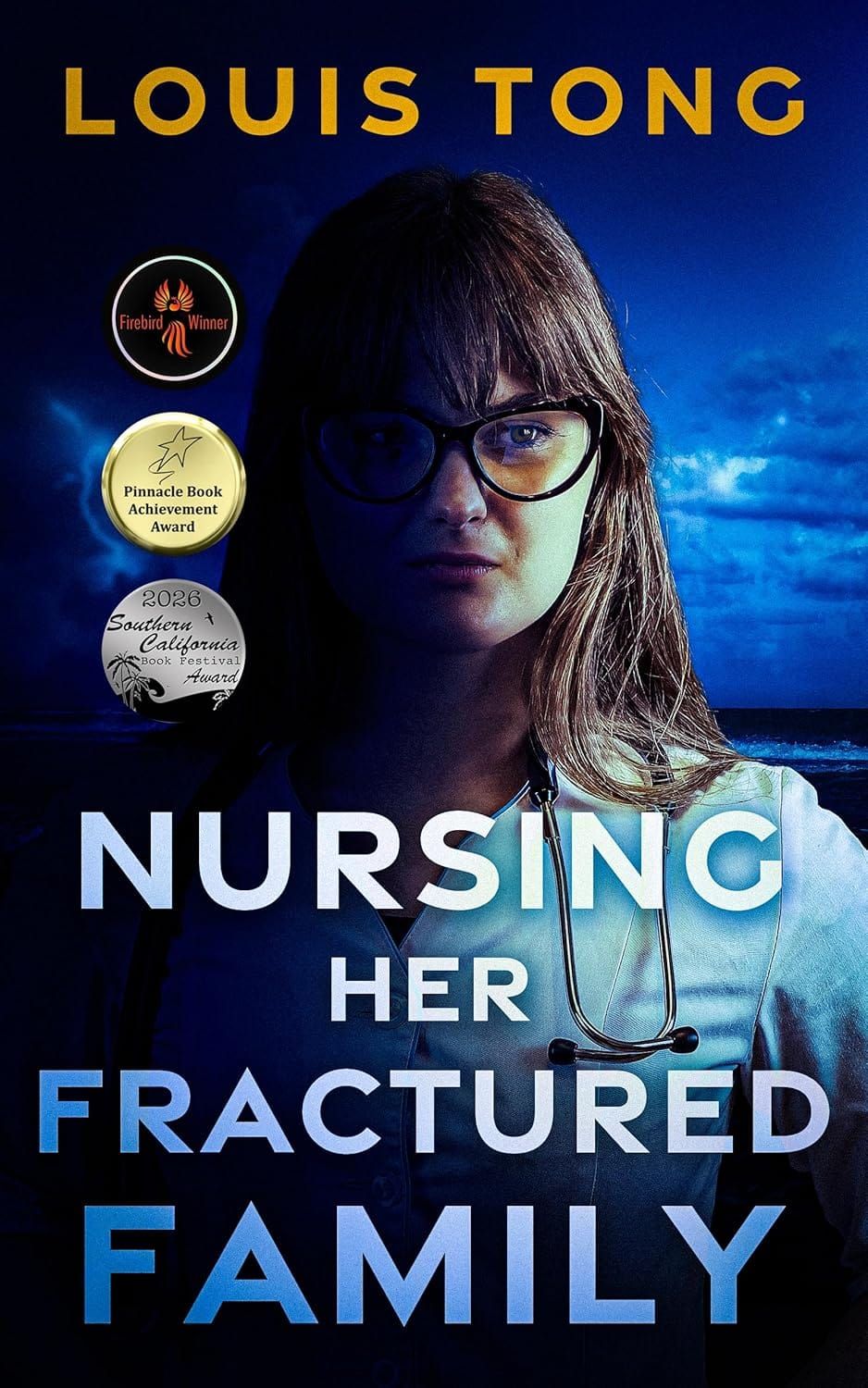
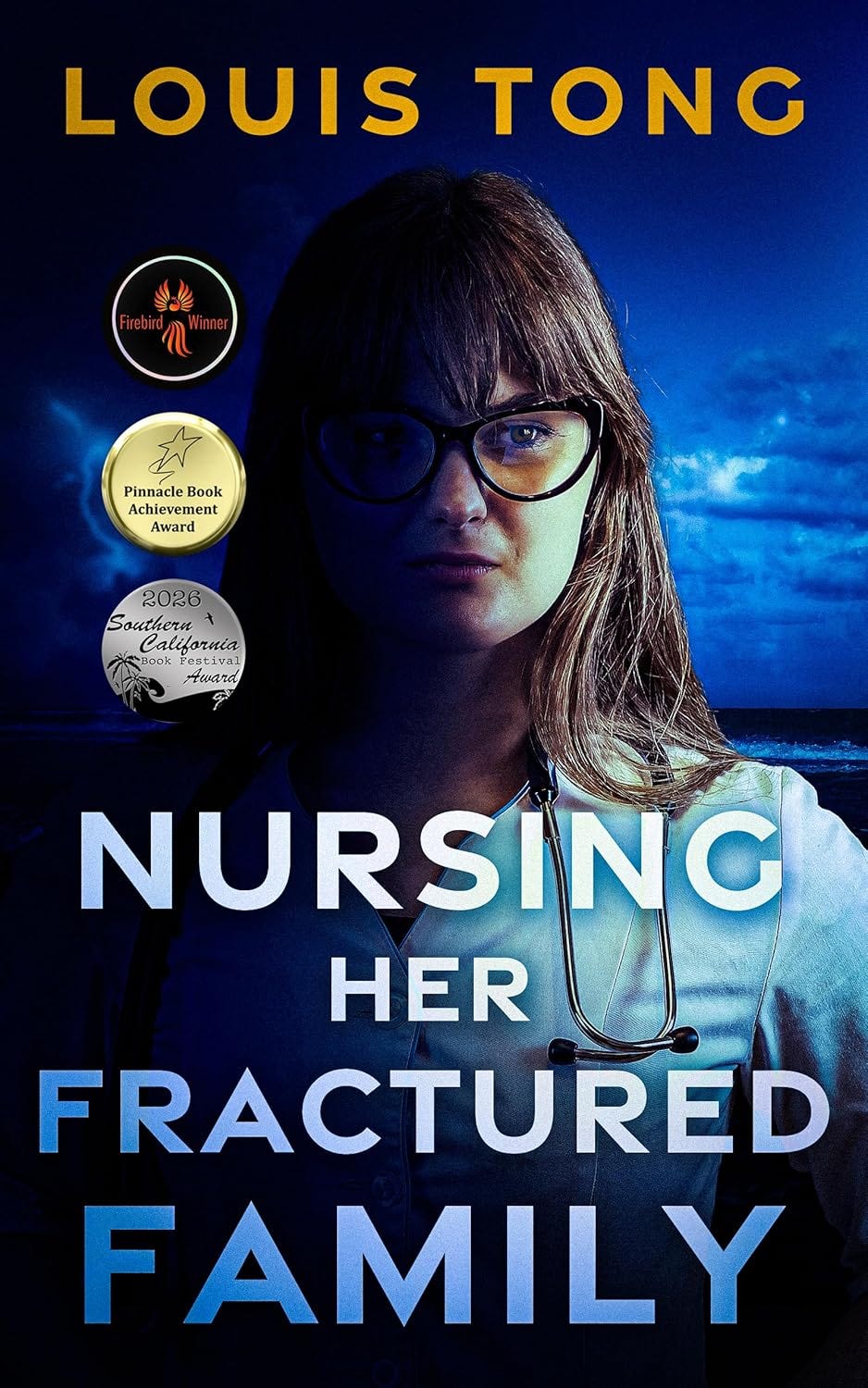
Such thoughts eventually gave birth to the character, Penny, who works as a nurse, and her story in my novel Nursing Her Fractured Family.
The tension between professional control and familial powerlessness (the Clinical Paradox) explains why many clinicians become cynically detached; naming and exploring that paradox through fiction can help clinicians reclaim agency and empathy.
The character’s central problem
In the novel, I’ve designed highly specific scenarios where my main character faces a two-factor problem. Each time, under unique circumstances, the character’s stubborn determination and stoic adherence to her principles produce a dramatically different outcome. Eventually, one such decision, action and consequence has changed her worldview.
Ultimately, Penny is torn between her own ambition and freedom on one hand, and fending for her mother [the two-factor problem].
The challenge is, how does the specificity of Penny’s adventure create the universality of the themes, especially those that relate to human illness and suffering?
Some readers might want to imagine Penny as their avatar in her adventures. Readers can choose to interact with the fiction in any way they wish. Penny’s interiority and decisions were never meant to be a blueprint for relationships. If they were, the story would fail.
Penny is a flawed but easily empathetic character; it is not difficult to want to cheer for her, even if her actions could range from foolhardy to earnest. Even if you disagree with how she approaches her mother, I hope that her mangling and fumbling but sincere attitude would be compelling to follow.
Institution vs family responsibility
Slight digression about other characters and subplots. The beauty of fiction is that the author can throw multiple perspectives into a two-factor problem. Every character and subplot is an opportunity to present a different perspective from Penny’s. In one subplot, Penny’s encounter with the Raphael character and her tour of a large mental health institution provide contrasting approaches to mental health care, ie., family’s versus the state’s responsibility.
Who can care for the mentally ill apart from health professionals? The Raphael subplot illustrates that family presence is critical if patients are to be discharged early from institutional care.
One could make the case that mental health care is unique in that the closest members of the family may still be incompetent to care for the patient. This is one thread that is exploited in the story because it increases the stakes for Penny. It can be argued that Penny’s mother is a “difficult patient” because of her delusions; because of her smart-ass actions, she could also be regarded as a self-centred person who wishes to do whatever she fancies with no consideration for anyone else.
Through Penny’s perspective, I hope the relevant story themes are revealed organically, and I can only leave readers to come to their own conclusions about them.
Regardless, for fiction to be engaging, it is necessary to sustain reader interest throughout the story by creating suspense and a strong narrative drive. There is intrinsic suspense because of the lack of information Penny has about her family’s background, including past financial transactions. A strong narrative drive is triggered by Penny’s desire and the decisions she makes to address the obstacles she faces.
Character stakes drive the narrative
In real life, outcomes of healthcare scenarios are often not immediate, and the stakes sometimes don’t become evident until considerable time has passed. One of the roles of fiction is to enlighten and illustrate problems through clear and imminent stakes encountered by the character. This role is something not easily fulfilled by real case studies.
In fiction, one can create the stakes so extreme that in response, the character’s emotions emerge raw. That is sometimes difficult to read, one writer remarked in a critique session. That’s only because you’re human, and no stranger to adversity, I said.
Why are my main characters so steadfast and unmoored? Why should they persist and deal with the series of stresses that come tumbling into their lives--why? Well, if they are not broken, why would they question their core beliefs? How would they see the contradiction or incompatibility of their values with their reality?
How do I raise the stakes in the early part of the story?
One moment, Penny faces a dying man as a hospice nurse, and the next, she returns to her home where she is a daughter to her unappreciative mother and loansharks have splashed red paint on her door.
Penny constantly questions whether her pursuit of a career in Florida is a “selfish” act or a necessary escape from a “narrow world”. A central theme is thus the guilt of seeking freedom.
How many people are facing this dilemma in Singapore? Many local careers are limited by the geographical restrictions and economic realities of Singapore’s size and population.
The story examines the “saviour complex” and the heavy emotional burden placed on healthcare providers who are also primary caregivers within dysfunctional families. Penny wants some control over her mother’s life, just like how healthcare workers exert control using patient diagnoses and protocols. The Clinical Paradox: Despite her nursing skills, Penny feels powerless against her mother’s “cyclone of delusions,” leading to a cynical outlook: “Family is a constant heartache.”
Because healthcare careers are demanding and often stretch family ties, the kind of emotional fracture that Penny exemplifies can also occur in the real life of a physician. Physicians will relate to the struggle of maintaining professional distance while being “emotionally fractured” by those they love. To all of us, family members who are mentally ill are definitely “difficult” patients. When their personal lives collide with their professional duties, it’s hard not to be cynical and overly introspective.
The wider meaning of family
Psychological problems don’t occur in isolation, unlike many physical diseases. Inevitably, these are woven into a person’s social and family context. In particular, it is futile to manage carer stress without understanding family relationships.
Penny views her sister as her most loved person, yet their relationship is defined by Penny’s need to “coddle” and “protect” her, which the GP Dr. Krishnan notes may actually hinder Winnie’s growth. Winnie, initially the most vulnerable person in the novel, borrows from the endangered innocent archetype. She completes her arc by evolving into Penny’s critical ally.
During Penny’s quest, she meets another woman nurse who exemplifies the kind of courage and fortitude that she finds lacking in herself. It is natural that she is drawn towards this new interest that isn’t part of her family. This process also teaches Penny to ponder the wider meaning of family.
(Don’t read the next paragraph if you want to skip all spoilers, but even this section will not reveal the novel’s climax.)
At the end of the story, it is a relief for Penny to discover that “family could include people not related by blood” and that a healthcare career is a journey of “building bridges” across divides. This resolution offers a narrative of recovery from the Eldest Daughter syndrome, as Penny chooses to “follow her own path” and embraces her own identity outside of her familial role.
The ending also questions “saviour” impulses, framing the moral hazard of overreach and the harm it can cause. Should we re-examine some of our well-meaning motives?
Personal stories and novels that mirror clinicians’ ethical conflicts provide a safer, more accessible route to understanding systemic caregiver strain than dry statistics alone. The emotional costs of mental-health care gaps should therefore be part of public conversations about workforce wellbeing.
Appendix Box 1: Further Reading
The eldest daughter syndrome: https://www.straitstimes.com/opinion/what-is-eldest-daughter-syndrome-and-how-do-we-fix-it
The saviour complex: https://health.clevelandclinic.org/savior-complex
Appendix Box 2: Where to get the book
The ebook version of Nursing Her Fractured Family is available for pre- orders on the Amazon store, which comes with some bonuses including topics for book club discussion: https://www.amazon.com/dp/B0GG2MQ2RY/
Click here for a short video clip introduction: https://sendvid.com/xcpwr3zj
If you enjoy the book, please leave an honest review as this will help more people access this story. Curious to know what else I write, check out Louistongauthor.com
Professor Louis Tong spends his days at the Singapore National Eye Centre, where he leads research into dry eye disease and ocular surface inflammation, and has spent three decades building a career as a clinician-scientist at Duke-NUS and the Singapore Eye Research Institute. Outside the clinic, he writes medical fiction, exploring the emotional undercurrents of hospital life through short stories and flash fiction — from a suspenseful domestic scene interrupted by illness, to reflections on what a Hollywood thriller can teach a writer about plotting.
His blog also turns a curious eye on craft itself, including a recent experiment putting AI writing tools through their paces on a piece of fiction. It’s a reminder that the instinct to notice, to narrate, and to sit with ambiguity isn’t confined to the page or the clinic — it moves between them.
Talk back
Thoughts, reactions, a story of your own. We read every comment.