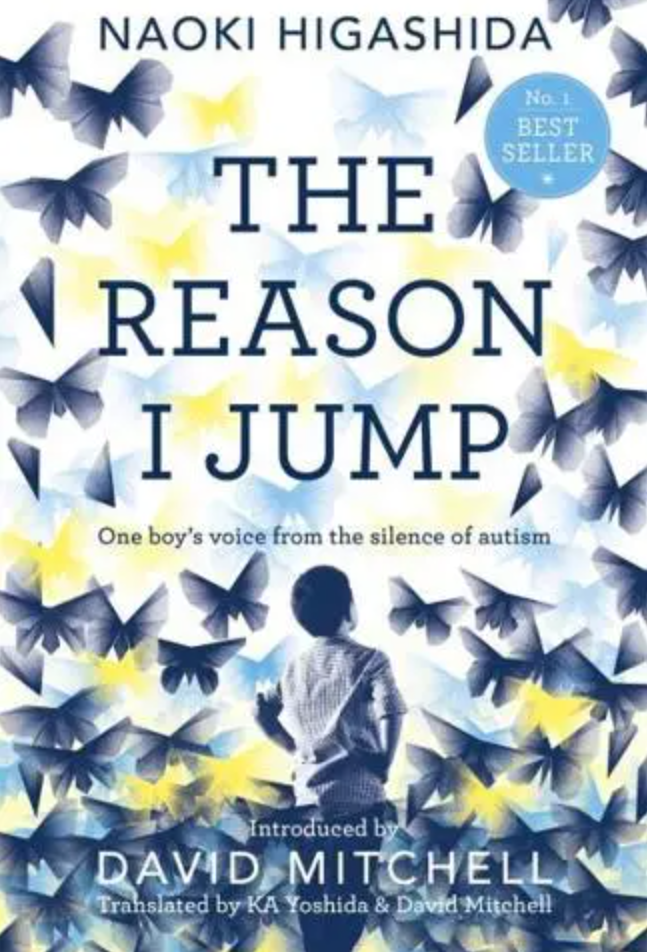
Imagine living in an alien world, filled with beings who look just like you, speak similar words as you, but their dictionary of meanings is something you’ve not read before. Something as fundamental as existing, is fraught with potential misunderstandings because you live in a very different way from the aliens.
Written in a conversational question-and-answer style, Higashida answers questions that you may have always wanted to ask someone with autism about, like “Why don’t you make eye contact?” and “Why do you line up your toys?”. Higashida, an adolescent boy with severe autism at the time of writing, struggles to verbally communicate with the rest of the world until he learns written communication using a handmade alphabet grid. What ensues is an eloquent, gently humorous and empathetic account of what it’s like to live as a person with autism. The inner world of Higashida is not, as we presume, filled with meaningless chaos and noise, but with emotional sensitivity, joy, shame, and the loneliness that comes from being different and misunderstood.
As David Mitchell highlights- both “emotional poverty and aversion to company are not symptoms of autism, but consequences of autism and its harsh lockdown on self-expression and society’s near-pristine ignorance about what’s happening inside autistic heads”.
I feel perhaps the most poignant question Higashida is asked is “Would you like to be normal?” His answer – that he would have been ecstatic to be “normal” in the past but has now come to accept himself (and his autistic traits) as normal- provides some pause. If “normal” is a social construct, who gets to decide what’s “normal”, and could we broaden our perspectives and understanding of human differences, to a point where different “normals” don’t collide but rather, co-exist as a new normal?
This book was inspiration for a documentary exploring the lives of young people with autism by filmmaker Jerry Rothwell “The Reason I Jump”
Get the book here.
Yee Hui is a paediatric intensivist with one too many creative hobbies and a room overflowing with craft supplies to prove it. She believes that stories can be healing, and help to shape the world we live in.
Talk back
Thoughts, reactions, a story of your own. We read every comment.