Rediscovering the Humanities in a Technological World
In the 2023 film Barbie, the titular character confronts an existential question—one amplified by Billie Eilish’s song, “What Was I Made For?” which won both Academy and Grammy Awards. In an age when artificial intelligence permeates boardrooms, laboratories, and the public imagination, increasingly taking over and even outperforming humans in many domains, her question feels more universally urgent. We may find ourselves asking not merely what AI can do, but what we ourselves are meant to be.
The humanities — often dismissed as vague or impractical — might just hold the answer. At their heart, the humanities are not just about old books or ancient history; they are about us. About how humans make meaning of life through culture, stories, language, values, and art. They explore our hopes and fears, our mistakes and triumphs, our search for beauty and truth. While I once chose a “pure science” route in high school, leading to a career in medicine and as a clinician scientist, I now find my greatest joy and fulfilment in exploring the subtleties of human nature – whether in interactions with patients, in leading people, or in expressing myself to a wider audience like this.
The phrase “Oh, the humanity!” — originally uttered as a cry of despair during the Hindenburg disaster — has since evolved into a tongue-in-cheek expression of melodrama. The same phrase now reflects the awe and irony in a world increasingly shaped by artificial intelligence. What does it really mean to be human — especially when machines can now mimic what we once thought was uniquely ours?
The humanities are about exploring the core of what we are — what it means to be human.
The Age of Artificial Creativity
There was a time when we believed creativity was the final frontier — the one thing that only humans could do. That belief has been upended. AI now composes music, paints surrealist images, writes novels and scripts, and even tells jokes (some better than others). These systems can generate beauty, evoke emotion, and surprise us with originality.
While AI’s creativity is technically impressive, it is not grounded in experience. It does not create from anything. There is no heartbreak behind its love songs. No triumph behind its anthems. No loneliness behind its poems.
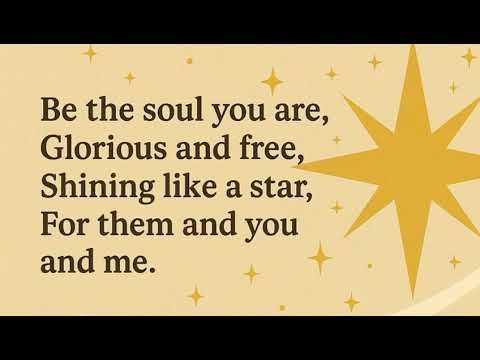
Human creativity, by contrast, is deeply personal. Ever since I submitted my first poem to the former Radio Television Singapore (RTS) at the age of eleven and was selected to read it on air, I have loved writing poems. I knew just a bit of musical theory and wished I could turn these into songs by finding a collaborator who could help set them to music, but I could never find the right person willing to do that. Recently, I started experimenting with writing lyrics, which I then use AI to transform into songs. The songs are now on YouTube and listed on Spotify and Apple Music under “William Hwang” and “Why K!” (my initials). They have received good feedback from many of my friends, but more importantly, they’ve provided an avenue for my own self-expression. While AI supplies the music, I always ensure that the lyrics are fully and entirely mine – fully human.
When I write lyrics, I’m not assembling patterns. I’m expressing memories, reflections, and emotions that have shaped me — as a doctor, a father, a friend. Even if I let an AI generate the music or accompany the performance, the lyrics remain fully mine. They come from my lived story – my joys, my passions, and my delights, as well as my failings, my hurts, and my doubts.
And that, I believe, is what makes our creativity distinct: it is not just about novelty of a created work, but about the real-life meaning behind the content.
The Lived Experience and Heartfelt Empathy
AI can now simulate empathy. It can detect emotional tone, choose compassionate words, and offer comfort through virtual therapy apps or support chatbots. It listens carefully, remembers everything, reflects accurately, and adjusts its tone to how we are responding
But let’s not confuse simulation with sensation.
AI has never lived many of our truly human experiences. It has never felt the wind in its hair or the sun on its skin. It has never felt that gripping sensation of heartache in its chest. It has never felt the stinging feeling in its eyes as grief rolls down its cheeks. It has never felt ecstasy thrill up its spine and delight tingle its skin.
When a friend weeps, a human does not respond with an algorithm. We feel the weight of their pain. Our empathy is visceral, often involuntary — shaped by our own experiences of loss, betrayal, joy, and love. It is messy, unpredictable, and sometimes painful. But it is real.
AI may one day pass the Turing Test of empathy. But it will never pass the existential one — because it cannot suffer or feel true joy. And without suffering and ecstasy, there can be no true compassion.
The Beautiful Imperfection of Being Human
One of the most profound differences between AI and humans is our imperfection — and the fact that we embrace it.
Where AI strives for accuracy, we laugh at absurdity. Where AI seeks optimality, we muddle through. We trip over our words, make regrettable choices, fall in love with the wrong people, and laugh at things that make no sense.
And yet, it is in these imperfections that we find our greatest humanity.
As John Legend sings, “Love your curves and all your edges, all your perfect imperfections.” Our flaws are not bugs in the system. They are features of our souls. They give us character. They teach us humility. They allow us to forgive.
In medicine, I’ve learned that healing is not just about eliminating disease — but embracing the wholeness of the person. Their frailty, their resilience, their stories. The art of medicine — like the art of life — lies in holding space for imperfection.
Morality, Conscience, and the Freedom to Choose
A machine may be programmed to behave ethically. But only humans can choose to live morally.
That distinction matters. The ability to make ethical decisions is not simply about following rules. It is about wrestling with dilemmas, being guided by conscience, and sometimes paying a price for doing the right thing.
In Chinese culture, this is captured in the phrase “做人的道理” — the principles of being human. These include respect, honesty, responsibility, and kindness. Not because someone told us to, or because it was programmed into us — but because we believe in them.
To be human, then, is to have the freedom to choose goodness. To stand by values even when it is inconvenient. To feel the weight of consequences. To take responsibility.
AI does not yet — and may never — bear that burden. Humans do.
Laughter, Absurdity, and the Soul of Humor
There’s something irreducibly human about laughter. Not all of it is logical. In fact, some of the best comedy is delightfully illogical — think of the “Mo Lei Tau” (无厘头) comedy of Stephen Chow, which literally means “makes no sense.”
Why do we laugh at things that don’t make sense? Because life often doesn’t make sense. And laughter is how we cope with the contradictions.
This is something AI doesn’t understand, no matter how well it tells a joke. It may understand the structure of humor, but not the spirit of it. Because true humor is born of tension — of irony, of timing, of shared cultural and emotional context. AI laughs because it is trained to do so – but we sometimes laugh until our sides hurt and tears roll down our cheeks because we just cannot help it.
We laugh, sometimes, to avoid crying. We laugh because we survived. And because we recognize ourselves in the ridiculousness of life.
Being Human is a Daily Decision
All of this leads me to one simple but powerful belief: being human is not just a state — it’s a decision.
Every day, we choose to be human when we write lyrics from the heart instead of outsourcing it to an algorithm. We choose to be human when we show kindness even when no one is watching. We choose to be the humans we are when we make art, tell stories, feel deeply, care too much, laugh too loudly, and cry too freely.
We choose humanity when we fall short and try again. When we forgive others — and ourselves. When we strive for meaning, not just output.
AI may be better at games, calculations, and even composing music. But it cannot long for beauty. It cannot ask, “What’s the point of all this?” It cannot sit silently in awe of a sunset or tremble with fear before an uncertain future.
Those are human experiences. And they are sacred.
Barbie’s epiphany connected to the song “What Was I Made For?” is the moment she realizes that her purpose is not to be an idealized doll designed for others, but to choose her own path as a human being with real emotions, imperfections, and agency.
Being human is not just what we are – it is a choice.
Final Reflections
In this age of AI, we are not diminished. We are called higher.
As machines become better at thinking, we must become better at feeling. As AI optimizes logic, we must reclaim our soul. And as algorithms take over more tasks, we must remember: the point of life was never just to do. It was to be.
So let us embrace our humanity not as a liability, but as a gift. Let us teach our children not just how to code, but how to care. Let us write our own lyrics, even if AI can sing the tune.
Because in the end, being human is not about how fast we compute or how much we produce. It is about how well we love, laugh, and live.
William Hwang is a Haematologist who has a special interest in treating patients with blood cancers and other diseases with haematopoietic stem cell transplants and other cell therapies.
Talk back
Thoughts, reactions, a story of your own. We read every comment.