Scanning the notes on the Monday morning before ward rounds, I had a foreshadowing that this particular family was going to be challenging to speak to- multiple family communication notes over the weekend, documenting the medical team’s repeated attempts to explain to the family what was happening to their child, and what seemed to be mounting frustrations by the family that so many things were being done and yet their child was not better.
Over the course of 3 days, our conversations resembled something like a tennis match - the medical team would shoot volleys of what we wanted to do for the patient (and clinical indications of why they needed to be done and why it was dangerous not to do so), and the family would appear to take in our explanations, then volley back their refusal to proceed with the majority of our plans.
By the 3rd day, I saw that overnight, the little gain I thought we had achieved the day before in our conversations had been reversed by the family during the night rounds, and we were back at square zero. The team was understandably frustrated. And perhaps, so was I.
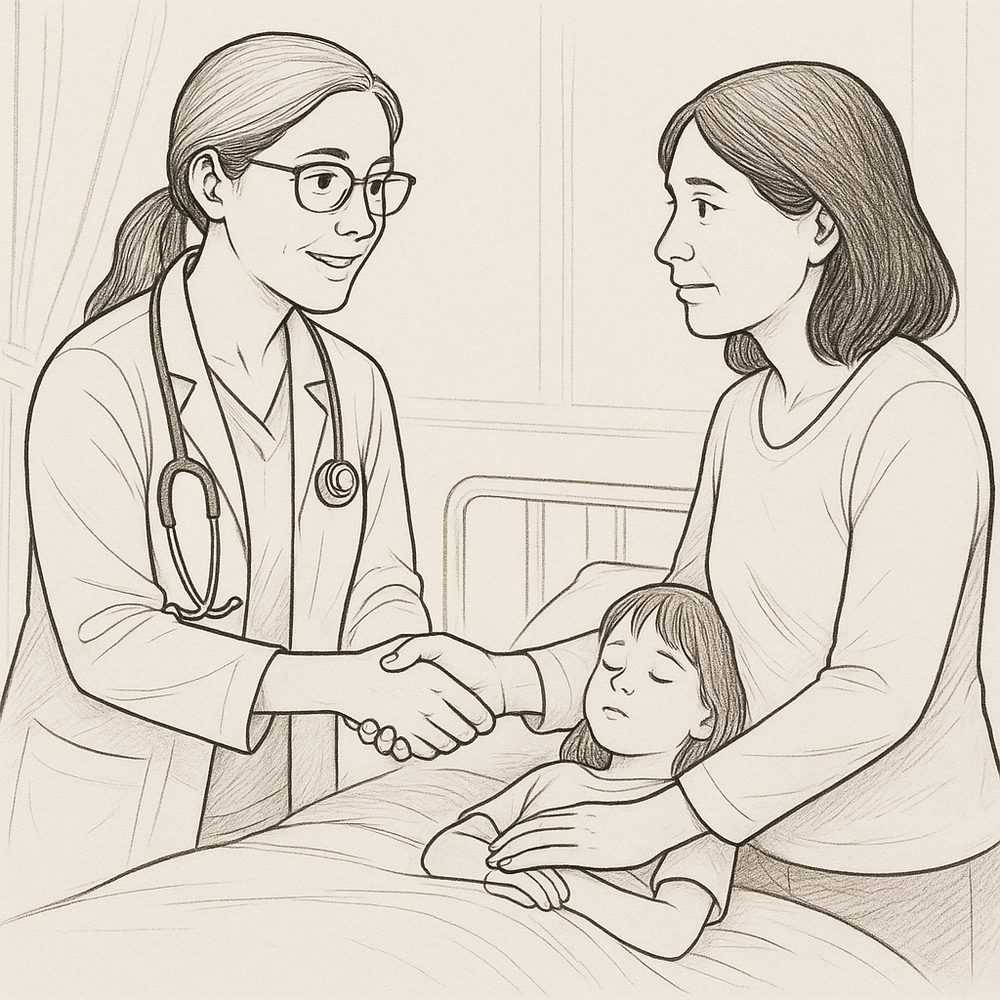
We waited for both parents to be present in the ward and I saw all the other patients first so that I could sit down unhurriedly with the family. The child had gotten used to me by that time and pulled my hand, indicating that she wanted me to pat her while I was speaking to her parents. The mom commented, “she usually doesn’t like strangers; she must like you a lot to ask you to pat her!”
I was truthful over our frustrations in advancing our plans for medical care for their daughter and how these disagreements were not helpful for her, and offered alternative options if their refusal to adhere to our care plans was due to a lack of trust with the medical team. Perhaps because I was now a regular face to them, or they saw me in a better light because their daughter trusted me, or maybe because I seemed willing to listen. I could see that the offer to transfer care came as a shock to them and was not what they had expected. “No”, they replied. “It’s not that we don’t trust you, but you and I, we believe in different things”. I heard how their past experiences with illness shaped their current thinking – chronic disease in one grandmother that was easily managed at home with oral medications, terminal disease in a grandfather where they chose minimal interventions and he died peacefully at home, a friend whose child with epilepsy died after being admitted to hospital. These stories spoke of a fear of hospital admissions and death, a longing for the comfort of home and family during illnesses, and a belief that chronic diseases could be managed in the outpatient setting.
They spoke to me about their faith – that what will be will be and much of life was in God’s hands. As parents of a child with autism, they had spent her entire life accepting that she would not be like normal children. She was incredibly difficult to feed (and her severe nutritional deficiencies with its medical complications were the reason why she was admitted in the first place); and our suggested interventions were unacceptable to the family - blood investigations that would cause her pain, IV medications that needed IV cannulae which she would pull out, medications that caused her to have increased urine output (and she needed to be helped to the bathroom each time that happened). It was clear she was loved, for they assumed all these care responsibilities for her – feeding her could take over an hour each time, gently coaxing her to take food and her oral medications. She had favorite foods from favorite shops, and they would Grab order these from all the way across the island to hospital just to get her to eat.
At the end of the conversation, they still didn’t agree to our suggestions, but we came to a compromise- they wanted to go home, to try our therapies but in a place both she and they would be comfortable with. They agreed to come back for follow-up and acknowledged all our concerns about premature discharge. At the end, the mom offered her hand to me across the bed and thanked me. Stunned, I instinctively reached across- a connection across space, between science and faith, medicine and heart.
Yee Hui is a paediatric intensivist with one too many creative hobbies and a room overflowing with craft supplies to prove it. She believes that stories can be healing, and help to shape the world we live in.
Talk back
Thoughts, reactions, a story of your own. We read every comment.