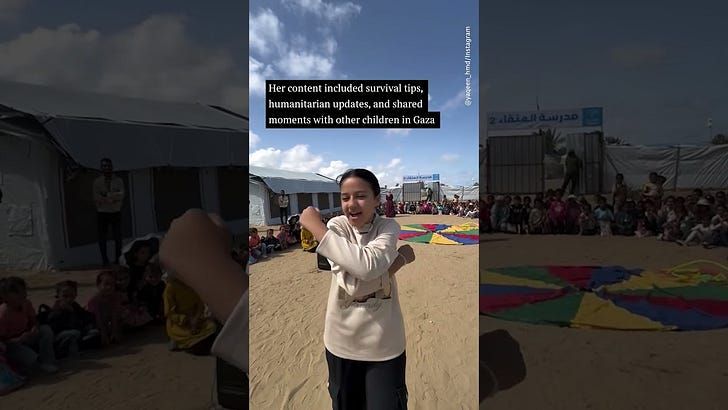
As doctors, we are trained to preserve life, to relieve suffering, to advocate for the vulnerable. To be the voice for the voiceless and marginalised.
But as we scroll through and view the livestreams, images and headlines from Gaza on our mobile phones daily, we cannot help but feel an overwhelming sense of a deep and hollow helplessness. The kind that sits in your chest and makes it hard to breathe. The kind that comes when children are killed even before they have ever had a chance to live.
The Numbers That Numb
We all see the pictures: tiny bodies wrapped in bloodstained shrouds, children carried out of rubble, emaciated to the point of skin and bone and searching for food scraps, with eyes wide open in shock, or forever closed (some may even say they are the lucky ones for not having to bear witness to any more suffering). We read about hospitals being bombed, doctors forced to choose which child to save, newborns dying in incubators because there is no electricity and basic medical supplies have run out.
As of 27 May 2025, over 56,000 people (54,271 Palestinians and 1,706 Israelis) have been reported killed in the Gaza war according to the official figures of the Gaza Health Ministry, as well as 180 journalists and media workers, 120 academics, and over 224 humanitarian aid workers. At least 1400 healthcare workers (HCWs) have also been killed in the conflict thus far. In many cases, HCWs have been specifically targeted, as well as the targeted destruction of healthcare facilities including hospitals, equating to the systematic dismantling of the healthcare system in Gaza. All in disregard of the Geneva Convention. And despite the WHO calling for the active protection of health care and that hospitals must never be militarized or targeted.
A Childhood Denied
Scholars have estimated 80% of Palestinians killed are civilians. Of these, UNICEF reports that at least 15,000 children killed with scholars suggesting that actual figures may be much higher. Many more remain buried under the rubble, most presumed dead. Still more are unaccounted for. In addition, over 26,000 children are reportedly injured, and nearly one million children repeatedly displaced. Children are dying daily from malnutrition and starvation due to inadequate access to basic food, medicines and humanitarian aid which are all being weaponised and now exacerbated by the blockade. While some humanitarian aid has begun to enter Gaza following international pressure, concerns persist about the neutrality and effectiveness of these efforts. The Gaza Humanitarian Foundation (GHF), a U.S.- and Israeli-backed initiative, has faced criticism for its lack of impartiality, with its executive director resigning over the inability to uphold core humanitarian principles. According to the UN World Health Organization (WHO), if the situation persists, nearly 71,000 children under the age of five are expected to be acutely malnourished over the next 11 months if they even survive. At the time of writing, the UN reports that 14,000 babies will die from starvation and malnutrition in the next 48 hours if essential humanitarian supplies and aid does not reach these communities in the Gaza Strip in time.
But these are not just numbers. It is birthdays never celebrated. It is laughter that will never be heard.
The Birth Lottery and the Right to Childhood
And we think: where a child is born should never ever dictate whether they get to have a childhood. The UN Convention on the Rights of the Child (UNCRC) demands this as a bare minimum. But this is the "birth lottery" they are born into and their daily reality.
Children are not combatants. They do not choose sides. They draw with crayons, not conflict lines. They ask for bedtime stories, not bombs. Every child deserves to be safe, to be nurtured, to be held when they cry. Yet, for too many in Gaza, these fundamental rights are shattered before they even begin to understand them.
Adverse Childhood Experiences: The Science of Scars
As physicians ourselves, who run a paediatric clinic and clinical services for adolescents and young adults respectively — many of whom have grown up managing chronic illnesses, challenging home and social circumstances, some being victims of non-accidental injuries (NAI) and abuse — we both have seen first-hand how early trauma can leave deep and lasting marks.
These are now known as Adverse Childhood Experiences (ACEs) and can have very significant long-term effects and consequences to the health of the child and adolescent, long into adulthood.
Even in a relatively peaceful society like Singapore, childhood adversity rewires the brain and body.
Gabor Maté writes powerfully about this: that trauma is not what happens to us, but what happens *inside* us when we are left alone with our pain. What, then, happens to a generation of children growing up in constant fear, surrounded by death, deprived of safety? What, then, in a warzone?
Children Deserve Peace, Not PTSD
The images from Gaza are not just snapshots of the here and now. They are precursors of lifelong scars. Of PTSD that will linger in teenage years. Of depression and anxiety that will haunt adulthood. Of generational trauma passed down through parenting shaped by survival.
It bears repeating: children should not just survive war—they should be allowed to live, to play, to dream. To grow up in peace.
The evidence is overwhelming and unequivocal. Exposure to armed conflict irreparably harms children—not only physically, but psychologically, developmentally, and socially. A landmark article in The BMJ (2020) outlines how children’s prolonged exposure to the toxic stress of war—through persistent fear, witnessing violence, and experiencing displacement—profoundly disrupts their neurological, emotional, and physical development. The authors describe how toxic stress affects the architecture of the developing brain, compromises immune function, and alters the hormonal systems regulating stress and growth. Further, a review in Asian Population Studies (2022) underscored how conflict fractures every determinant of population well-being—housing, education, healthcare access, and nutrition—leaving entire generations stunted both physically and emotionally.
These are not hypothetical harms. They leave lasting imprints, elevating the risk of mental health conditions such as PTSD, depression, and anxiety, and increase susceptibility to chronic diseases across the lifespan. The trauma is not just psychological but physiological—embedding itself in the very bodies of these young survivors. Without timely, sustained, and trauma-informed intervention, these children face a future shadowed by invisible wounds. And this, tragically, becomes the intergenerational legacy of war.
They are the lived realities of children in Gaza and other war zones. Childhood is not a luxury. It is a right. And one that too many are being denied. When bombs fall, it is not just buildings that collapse—it is childhoods. And the world must not look away.
A Final Note from the Frontline
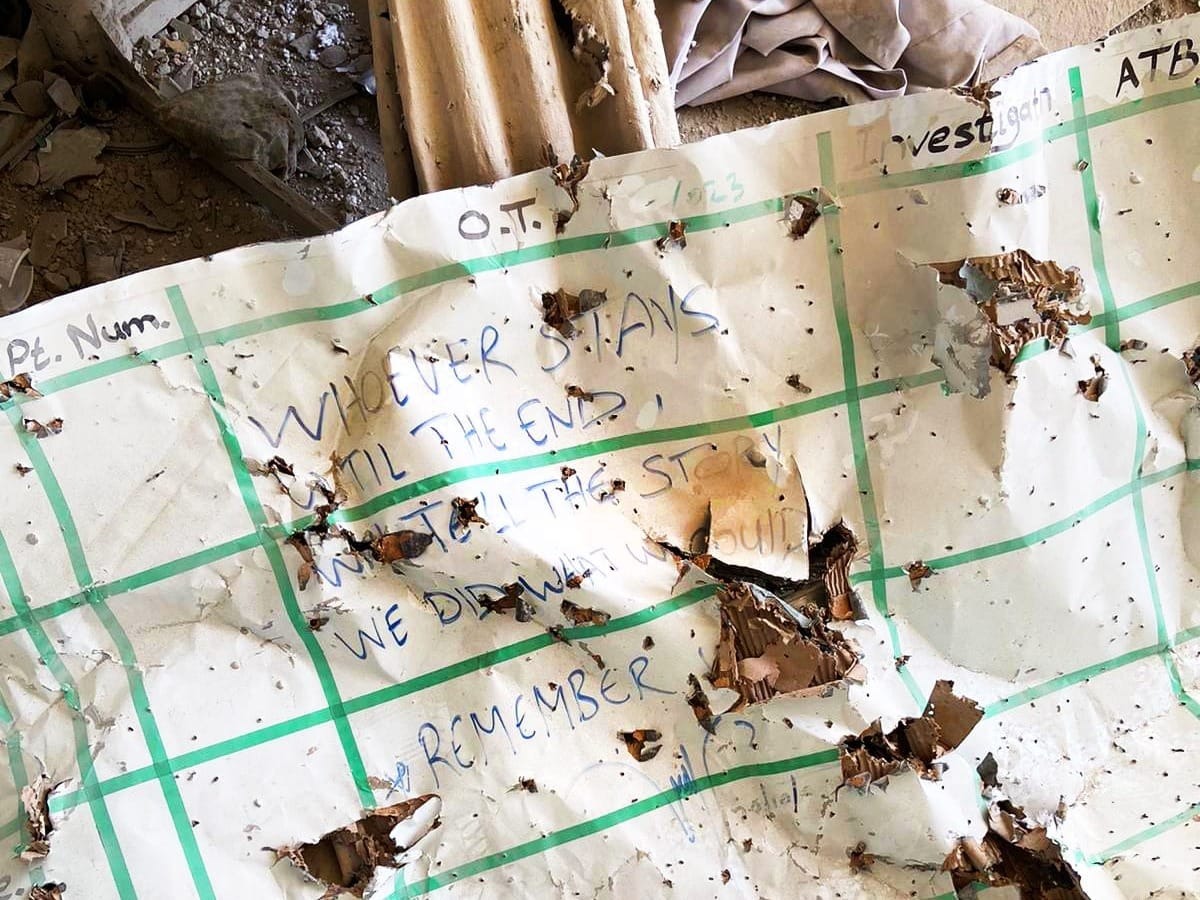
“Whoever stays until the end will tell the story. We did what we could. Remember us.”
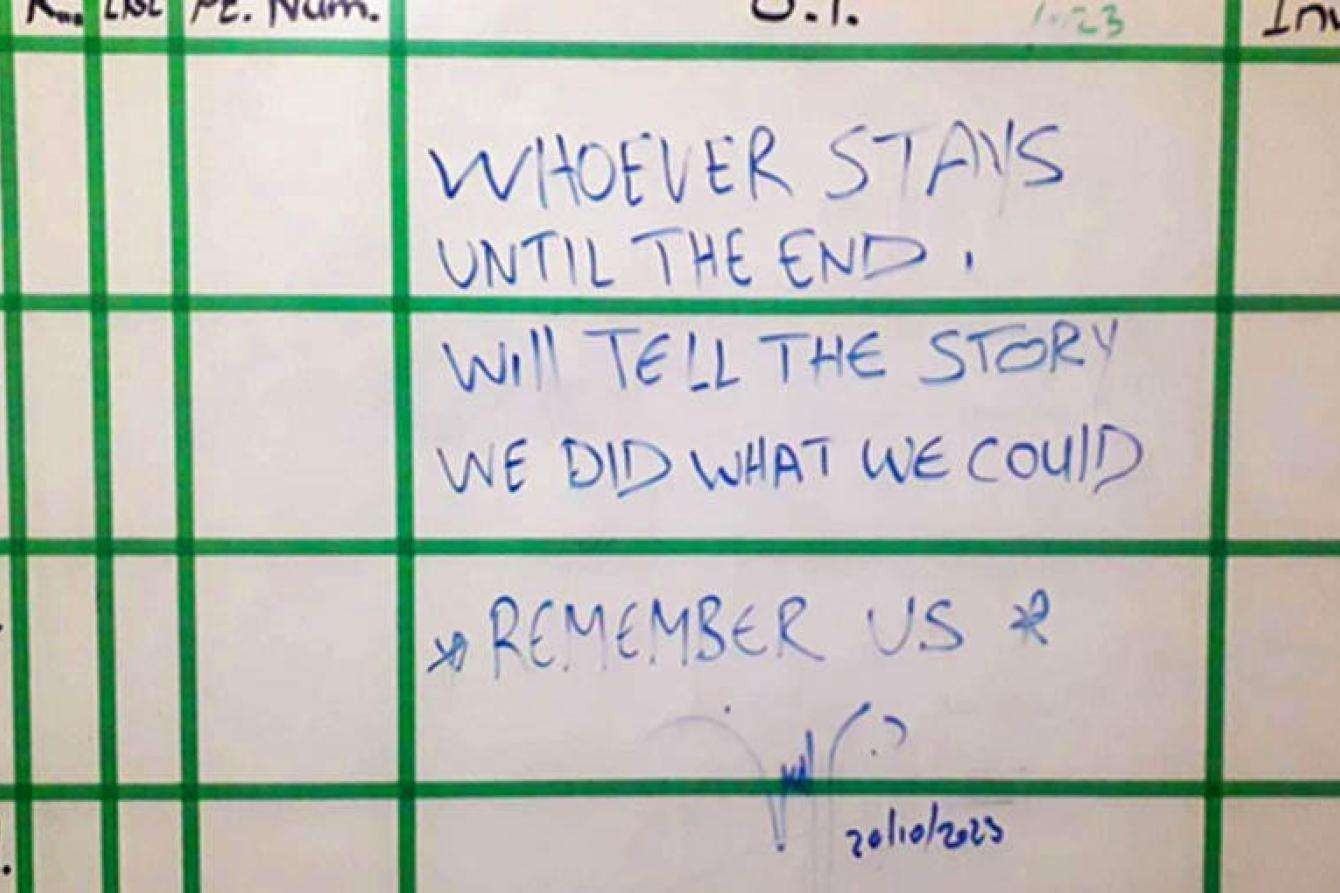
These were the words Dr Mahmoud Abu Nujaila wrote on October 20, 2023, at al-Awda Hospital in Jabalia refugee camp. He scribbled them in blue ink on a whiteboard used for surgery schedules. They were a testament to resilience, a final message of defiance.
A Genocide Unfolding?
In November and December 2024, both Amnesty International and Human Rights Watch (HRW) respectively and separately reported that the acts of aggression and inflicted conditions of life in Gaza amounts to extermination which is a crime against humanity and constitutes the crime of genocide under international law, committing prohibited acts under the Genocide Convention. Furthermore, the judges at the International Criminal Court (ICC) concluded that there are grounds to believe that war crimes and crimes against humanity are being committed in the Gaza Strip.
Medicine Is Not Neutral
Only some of the world’s major medical associations have spoken out. But not all. Too few, if you ask us. So much more can be done. It may be too little, too late for many. But better late than never, for others.
Médecins Sans Frontières (MSF), a non-governmental organisation (NGO) of French origin known for its projects in conflict zones, has condemned the siege. The British Medical Association (BMA) has called out violations of international humanitarian law. Healthcare workers—who should be protected—are dying alongside their patients. Hospitals—meant to be sanctuaries—are being turned into graveyards. And still, the silence from those with power is deafening. The Royal College of Paediatrics and Child Health (RCPCH), the membership body for paediatricians in the UK and around the world, in their 2025 AGM, reaffirmed its commitment to the protection of children’s rights in Gaza. This was only after much debate from across both sides of the aisle that the College, as a registered charity under the UK Royal Charter, should remain “neutral”, as children’s rights are being violated in many other areas of the world.
This Is About All Children
Standing up and protesting against the humanitarian disaster and crises in Gaza does not mean we are trivialising, minimising or ignoring other humanitarian atrocities and crises happening around the world, such as what is happening in places such as Sudan, Myanmar and Ukraine. Civilian casualties are particularly alarmingly high in Sudan and Gaza, especially children. The UN Convention on the Rights of the Child (CRC) should apply to all children without discrimination and insists that the best interests of the child must remain a top priority in all decisions that affect them.
We feel that the RCPCH’s stand was the right – and brave – thing to do. Two wrongs do not make a right. We need to make our voices heard. And now. This could be the first domino to fall. Hopefully, this marks the start of more professional bodies and organisations to take a stand and raise their hands and be counted.
What Can We Do?
To be silent is to be complicit. And yet, as clinicians far from the frontline, many of us feel powerless. What can we do beyond watching, mourning, and raging in private?
We can speak. We can bear witness. We can insist that medicine is not neutral when children are being killed. We can remind others that the right to life, safety, and health is not conditional on geography or politics. We can demand this from our government and own professional bodies.
In the words of our very own Singaporean, orthopaedic surgeon and medical humanitarian Dr. Ang Swee Chai, co-founder of the charity Medical Aid for Palestinians (MAP) and author of 'From Beirut to Jerusalem', a book that details her journey to war-torn Lebanon in 1982 to treat the wounded and dying :
“The whole world watches but what do we do? What can we do? That is the question I always ask. It sounds like nothing but if all of us do something, it can make a difference. Keeping quiet is not an option. Neither is despairing. And giving up? A complete no-no!”
This is not just a humanitarian issue—it is a moral one. The sanctity of childhood should be sacred to all of us. We owe it to our profession, and to our own humanity, to say clearly: this is absolutely not acceptable.
And if we truly believe in healing, then we must work not only to bandage wounds but to prevent them. We must hold space for grief, stand in solidarity with our colleagues risking their lives, and continue to hope for a world where no child’s future is reduced to rubble.
A child is a child—regardless of nationality, race, language or religion.
Whether they are Israeli or Palestinian, Ukrainian or Russian, Sudanese or South Sudanese, Rohingya or Burmese, Syrian or Yemeni, Congolese or Rwandan—every child deserves to be safe.
To be held, not harmed.
To be heard, not hidden under rubble.
To simply be a child, and to grow up in peace.
Disclaimer
This article was co-written by Dr Raveen Shahdadpuri and Dr Victoria Ekstrom.
Dr Raveen Shahdadpuri is a Paediatrician at KK Women’s and Children’s Hospital and Program Director of the SingHealth Paediatric Medicine Residency Program. Dr Victoria Ekstrom is a Consultant in Gastroenterology and Hepatology at Singapore General Hospital.
The views expressed in this piece are entirely our own and do not represent the official positions of the institutions with which we are affiliated.
Every effort has been made to ensure that all information, statistics, and sources cited are accurate and current at the time of writing. However, we recognise the dynamic and rapidly evolving nature of the Gaza conflict. As such, some figures or developments may have changed after publication. Where possible, we have referenced primary sources and credible institutions to reflect the situation to the best of our capabilities.
We write not as representatives of any organisation, but as doctors, and as human beings.
Further Reading
If you wish to read and learn more about the conflict in the Middle East and Gaza, and why people keep talking about Palestine, this is a good book which gives a good overview of the background of the conflict and also helps answer the key questions that Singaporeans often have about Palestine.
Walid Jumblatt Abdullah - Why Palestine?: Reflections From Singapore.
Ethos Books. Published : 2025.
ISBN: 978-981-17539-5-4
How You Can Help
Even if we are far from the frontlines, there are ways to act with compassion and solidarity. Here are a few avenues where help can make a real difference:
1. Donate to Organisations Providing Lifesaving Aid
- Médecins Sans Frontières (Doctors Without Borders)
Provides emergency medical care to those affected by the conflict, including surgery, trauma care, and maternal health services.
👉 https://www.msf.org/donate - Medical Aid for Palestinians (MAP)
A UK-based charity co-founded by Singaporean Dr Ang Swee Chai, MAP supports the health and dignity of Palestinians living under occupation and as refugees.
👉 https://www.map.org.uk/donate - UNICEF – Gaza Crisis Appeal
Delivers emergency nutrition, water, healthcare, and psychological support to children and families in Gaza.
👉 https://help.unicef.org/gaza-emergency
2. Support Local Efforts
- Singaporean activist Gilbert Goh has been raising funds and awareness for Gaza through on-the-ground and online efforts. His recent initiative includes direct humanitarian aid deliveries. You can follow and support his work here:
3. Speak Up and Share Responsibly
- Use your voice to advocate for humanitarian protections and the rights of children in conflict zones.
- Share credible sources and verified stories to combat misinformation and amplify the call for peace.
As with all donations and support efforts, please do your own research to ensure that the causes and organisations align with your values, and that they are transparent and accountable.
In times like these, even small acts of care can ripple outward. Let us not underestimate the power of collective compassion.
Talk back
Thoughts, reactions, a story of your own. We read every comment.