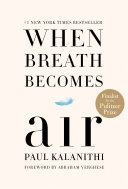
There is a moment near the start of Paul Kalanithi's When Breath Becomes Air when the neurosurgeon, now the patient, looks at his own CT scan and reads it the way he has read a thousand others, except this time the tumour is his.
That reversal, the healer becoming the sick, is one of the oldest engines of the illness memoir, and it is why the genre matters to anyone in medicine. These books let a clinician stand, for a few hundred pages, on the other side of the bed.
This is a guide to the best of them: not a ranked list, but a shelf, organised by the kind of story illness tends to tell. If you run a book group, teach a medical humanities session, or simply want to read your way deeper into the field, start here. For the broader canon of theory, poetry, and criticism, see our fuller reading list.
Three kinds of illness story
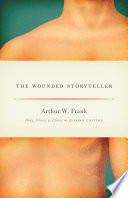
The most useful map of this territory comes from the sociologist Arthur Frank, whose The Wounded Storyteller (1995) argues that sick people tend to tell one of three kinds of story. Once you can hear them, you cannot un-hear them, and they make the memoirs below far richer to read.
The restitution narrative is the one medicine prefers: I was well, I fell ill, I was treated, I am well again. It is the plot of the advert and the recovery story, and it works right up until it doesn't: until the illness is chronic, or terminal, and restitution is off the table.
The chaos narrative is the anti-story: the account of a life coming apart, told without the comfort of sequence or meaning, because none is available yet. It is the hardest to read and the hardest to write, and it is often the truest.
The quest narrative accepts the illness and asks what it is for: what it might yield, teach, or make of the person who carries it. Most published memoirs are quests, because the quest is the shape that survives being written down. The best ones earn it rather than assume it.
The patient's account
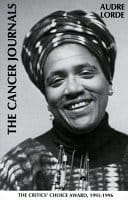
Audre Lorde, The Cancer Journals (1980). After a mastectomy, Lorde refuses the prosthesis, the silence, and the language of brave positivity pressed on women with breast cancer. A short, fierce book that turns private illness into public argument. A quest, but a political one.
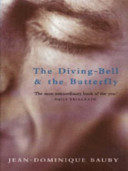
Jean-Dominique Bauby, The Diving Bell and the Butterfly (1997). The editor of French Elle, left with locked-in syndrome after a stroke, dictated this entire book by blinking his left eyelid, one letter at a time. He died days after it was published. As close to a pure chaos narrative made beautiful as the genre has produced.
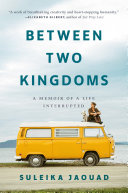
Suleika Jaouad, Between Two Kingdoms (2021). Leukaemia at twenty-two, then the stranger problem the memoirs rarely reach: how to live once treatment ends and you are neither dying nor quite returned. Strong on the aftermath most books skip.
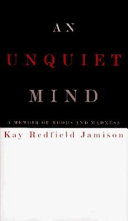
Kay Redfield Jamison, An Unquiet Mind (1995). A clinical psychologist who studies mood disorders writes about living with her own bipolar illness. The doubled authority of expert and patient at once makes it unusually clarifying about mental illness from the inside.
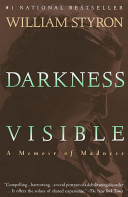
William Styron, Darkness Visible (1990). A brief, unflinching memoir of the depression that nearly killed him. It gave a generation of readers language for an illness that resists description, and it remains the book to hand someone trying to explain their own.
The clinician's view
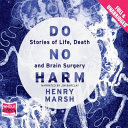
Henry Marsh, Do No Harm (2014). An English neurosurgeon writes with rare candour about the operations that went wrong and the patients he could not save. The value is the honesty about error, the thing medical memoirs are usually built to avoid.
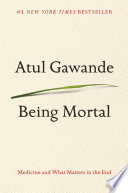
Atul Gawande, Being Mortal (2014). Less a memoir than a surgeon's reckoning with what medicine does badly at the end of life, and how it might do better. The book that put the phrase "what matters in the end" into wide circulation and changed how many clinicians talk about dying.
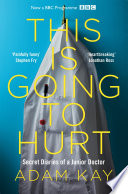
Adam Kay, This Is Going to Hurt (2017). The diaries of a British junior doctor in obstetrics and gynaecology, very funny for most of its length and then, suddenly, not. A precise record of what training does to a person, and why so many leave.
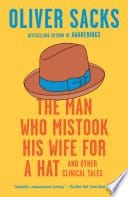
Oliver Sacks, The Man Who Mistook His Wife for a Hat (1985) and Gratitude (2015). Sacks spent a career writing his patients' neurological lives as full human stories rather than case reports. Gratitude, the slim book of essays he wrote while dying, turns that same attention on himself.
The carer and the bereaved
Joan Didion, The Year of Magical Thinking (2005). Written in the year after her husband's sudden death, while her daughter lay critically ill, Didion's account of grief is exact about the way a rational mind bargains with loss. The definitive book on being the one left in the waiting room.
C. S. Lewis, A Grief Observed (1961). A short, raw journal of bereavement after his wife's death, written by a man whose faith had made him famous and whom grief left with harder questions than answers. Still one of the most honest books on mourning.
The critics who taught us to read illness
Two books are not memoirs but belong on any serious shelf, because they shaped how the memoirs get read.
Susan Sontag, Illness as Metaphor (1978). Sontag, herself treated for cancer, dismantles the metaphors that attach to disease: the idea that illness expresses a hidden character flaw, that the patient somehow invited it. Read it and you will catch these metaphors everywhere, including in your own notes. She extended the argument to a newer epidemic in AIDS and Its Metaphors (1989).
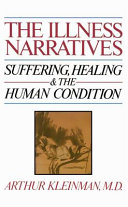
Arthur Kleinman, The Illness Narratives (1988). The physician and anthropologist who drew the lasting distinction between disease, what is wrong with the organ, and illness, what the sickness means in a life. The theoretical companion to every memoir above.
A note on the missing shelf
Read straight through, this list has an accent: mostly Anglo-American, mostly written in English. The illness memoir as a translated, widely read Asian genre is still thin, which is less a comment on the writing than on what gets published and translated. It is one reason a regional publication matters. The memoirs of dying at home in a three-generation household of interpreting a diagnosis across a language the patient's parents don't share, are largely unwritten. Some of them may be written by our readers. If that is you, our guide to medical humanities in Singapore and Asia is a good place to understand the field you would be adding to.
How to use this list
For a book group or a teaching session, pair one memoir with Frank's three types and ask which story the writer is telling, and where it shifts. Kalanithi begins in restitution and moves, unwillingly, into quest; Bauby never leaves chaos. For close reading of the kind our Close Looks department publishes, take a single page and attend to how the writer handles time, or the body, or the thing they cannot say. That attention is the whole practice, and these are the books that reward it most.
HEART publishes Close Looks, sustained attention to a single book, film, or image, alongside essays and verse from clinicians, patients, students, and carers.
Talk back
Thoughts, reactions, a story of your own. We read every comment.